
DIY face moisturizer is often the point where homemade skincare starts to feel truly satisfying.
You are no longer just cleansing the skin. You are supporting it, protecting it, and influencing how it feels throughout the day.
In this lesson, you will learn what a face cream actually is, how emulsions work, and how to make a safe, effective moisturizer at home using a clear and reliable method.
This tutorial walks you through the structure of a cream, the role of each ingredient, and the practical steps involved. It is designed to help you understand how face creams are built, not just follow a recipe.
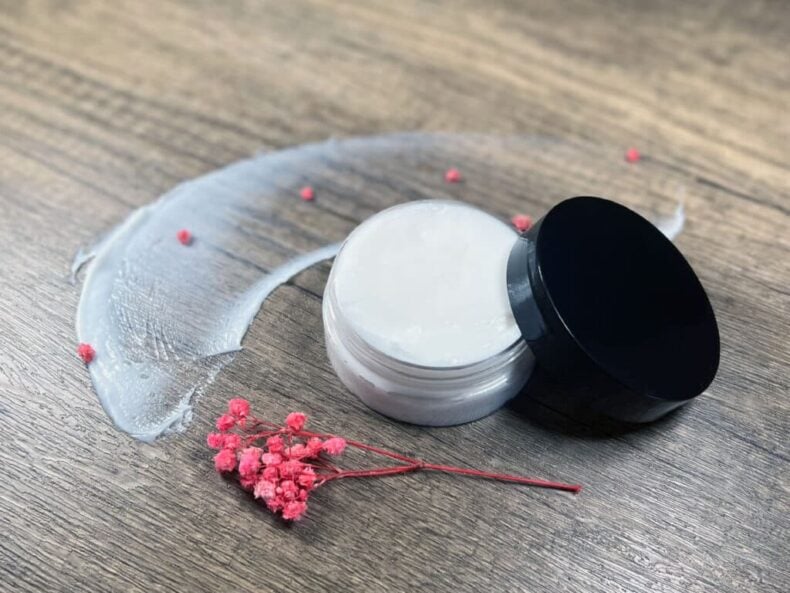
Part of the Radiance Email Course
This lesson is part of Radiance, my free email course that teaches the foundations of DIY skincare in a clear, structured way. If you would like to receive the full course by email, including the surrounding lessons that explain how products behave and why formulation questions start to appear, you can register here.
Subscribe to keep reading
This post is free to read but only available to subscribers. Join or login below to get instant access.



Hi, I have mango butter right now and not Shea ( I use a ton of shea) can I use the mango in this recipe with the same results?
Hello Jess,
Mango butter is a great substitute for Shea butter in this recipe.
Angela x
I made the rose and argan oil face cream on Sunday I didn’t have olive Squalene so used fractionated coconut oil the cream is so soft and silky my skin feels amazing.
I have done your face creams and serums course and learnt so much are you planning on developing any other courses,
Hi! I can’t get my mixture to thicken up. What am I doing wrong and how can I fix it
Dawna
San Diego, CA
Hi Dawna,
There are a few things that could have happened here, but the most common is the quality of the e-wax. However this recipe isn’t supposed to be extra thick, so it could be that you’re just not used to this consistency. I would increase the e-wax by a few grams to thicken it up, providing you are using a good quality e-wax like NF.
Hi Angela
What can you replace rice bran oil with?
Looking forward to trying your recipes
Hi Deborah,
I would swap it for anything that works well for your skin. It does not matter too much which oil you pick for this recipe.
Can I substitute argan with rosehip oil as I try to use what I have and not keeping too many carrier oils
Hi Esther,
Rosehip is a brilliant carrier oil and you can definitely substitute argan oil for this.
This is my favourite moisturizer. Thank you for sharing your recipe, and introducing me to olive Squalane.
Your welcome Shawna, I’m glad you liked the recipe!
Hi Angela thanks for your tips. I have malesma, do you have any tips for me.
Hi Mamoruti,
Melasma is similar to hyperpigmentation, right? If so, take a look at this response I gave to an email from someone asking about a similar problem a few weeks back. Hopefully, it’ll help you! 🙂
Hi there
Where would I buy the ingredients? Some.of them I recognize but.others not so much.
Hi Gina,
Each ingredient in my list of supplies should be linked to an area on the blog that gives you all the info you’ll need on where to buy them.
Hope this helps!
Dear Angela
Hope your well. I like what your doing with the site and keeping everything natural. I would like to ask! I have a hyperpigmented skin and it’s a bit dry. I would like you to recommend for me a homemade recipe for skin using oils.
Thanks
Hi Vanitah,
Thanks for your email, I love to hear that everyone is enjoying my recipes and content. As for a recipe for dry skin with hyperpigmentation, take a look at this post above, although I would definitely recommend a few substitutions to get the best results for your skin. You can use the same quantity of your substitutions as you would the original ingredients in my recipe.
Argan oil is great but I would recommend Evening Primrose Oil which should help tone your skin and reduce the noticeable signs of hyperpigmentation. It’s also amazing for dry skin and sinks in super quickly (so no greasiness at all!).
As for the essential oils, perhaps try substituting the Rose EO for Carrot Seed EO. It doesn’t have the most exciting of aromas, but it’s by far the best essential oil for hyperpigmentation. If you want to make it smell a bit better, you could try splitting the 10 drops (6/4 drops or 7/3 drops) across Carrot Seed and another essential oil such as Lemon, which is great at lifting dark spots. Although be careful using Lemon EO in a day cream, as you really don’t want to spend any amount of time in the sun while it’s on your skin. So if using Lemon, use it as a night cream and use no more than 3 drops (as it can be drying). Frankincense would be a good choice as well and less of an issue with the sun, but it’s much less sweet-smelling (more spicy and aromatic).
So, in sum, I’d definitely whip up a facial moisturiser with the Evening Primrose carrier oil and the Carrot Seed EO (or a combination of Carrot Seed and Lemon/Frankincense). You could also make up a nice whipped body butter using these ingredients alongside some gorgeous Shea butter for intense hydration. You can read more about body butters here if you haven’t seen my post on them yet.
Let me know how you get on. When you’re using your products, try to remember that it takes about 28 days for your skin to renew itself, and because of how skin cells form it can take this amount of time to fully see the results of your skincare formulations. So if you don’t immediately see results, don’t get disheartened. Just keep going because you’re on track to gorgeous skin that you can fall in love with again!
Hope this helps and good luck!
Hello! Is there any way to use more E-Wax instead of using cetyl alcohol? I have everything but the cetyl. The E-Wax I have is the Soft & Silky one.
Thanks for your help!
I wouldn’t up the amount of emulsifying wax, it’ll only make the finished product feel a bit waxy. The cetyl alcohol helps with thickening while also retaining a creamier consistency. I would experiment with adding a hard cosmetic butter, such as cocoa butter or shea butter instead of the cetyl alcohol. You’ll get much better results.
Hi Angela, Could I use rose water instead of distilled water and rose oilas I find the rose oil very expensive?
Mimi
Hi Mimi,
Yes, you absolutely can substitute the distilled water for rose floral water (hydrosol). However, if you’re planning to substitute the essential oil, I’d have a look at our Essential Oil Use Chart to find a good alternative. While floral waters are great, the essential oils have stronger active properties. But I do agree that Rose essential oil is a bit expensive. I often use Rose Absolute, which is much cheaper almost as good. Frankincense, Ylang Ylang and Rosewood are also excellent substitutes that are more reasonably priced.
I hope this helps and good luck making your cream!
Hi dear,
When I am making cream , always oils and water get separated, what’s the problem?
Hi Miriam
Are you using the emulsifying wax and using a mini blender to mix? This should prevent any separation issues?
Miriam,
Ta da!!!!!!! This is the THIRD time I have made the rose and argan oil cream and FINALLY it works!! I discovered the stick blender was one of my problems…I just used my whisk instead (gives the arms a workout but hey they need it!). I trickle the water in slowly and just keep whisking (reminds me of when I make cream of rice cereal). Also, I used a different brand of olive emulsifying wax and it was a nightmare! If I had read the reviews on it I wouldn’t have bought it so now don’t know what I will do with it. Well, try the whisk and I hope it works for you!!! The cream smells sooooo awesome!
April
Hi! How do rosehip oil and rosa moschata oil rate, compared?