
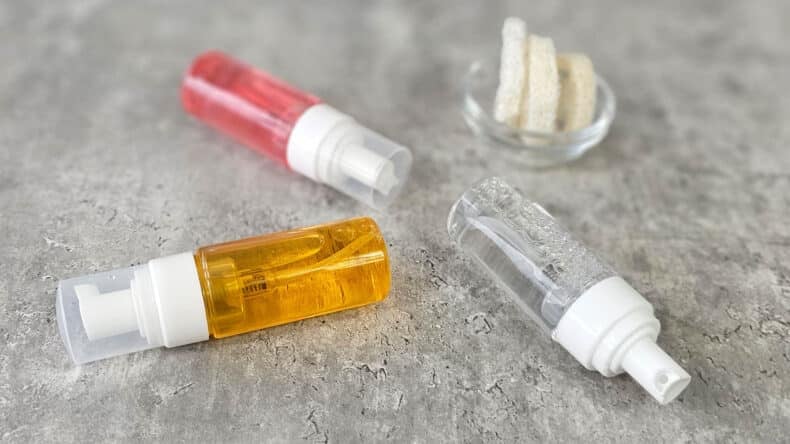
A good homemade facial cleanser is the foundation of my skincare routine. It removes daily build-up, excess oil, SPF and makeup, and prepares my skin for the rest of the routine.
Over the past few weeks we’ve shared several specialised DIY cleansers designed for particular skin need, including cleansers for dry skin, oily skin, aging or mature skin, sensitive skin, and even a powdered face wash for glowing skin. Those recipes allow you to tailor your cleanser very precisely.
But sometimes what you really want is a simple everyday cleanser, something gentle, balanced, & suitable for most skin types. That’s exactly what this natural DIY face cleanser is designed to be.
Introduction
This is a lightweight foaming cleanser recipe, it uses mild plant derived surfactants to lift away dirt and excess oil built up through the day.
The formula is super simple, making it perfect for beginners and easy to customize later if you want. If you’re just learning how to make a homemade facial cleanser, this is a wonderful starting point.
Benefits Of This Homemade Facial Cleanser
- Its a gentle foaming cleanser, suitable for everyday use.
- Made with mild plant-derived surfactants that cleanse without stripping skin.
- Simple beginner friendly recipe with only a handful of ingredients.
- Easy to customize for dry, oily, sensitive, or mature skin types (see below post).
- A lightweight foaming texture that feels fresh & rinses away cleanly.
- Makes use of a foamer bottle which instantly creates the foam.
- Affordable to make and easy to scale & adapt.
- A great foundational recipe for learning DIY skincare formulation.
What is a foaming cleanser
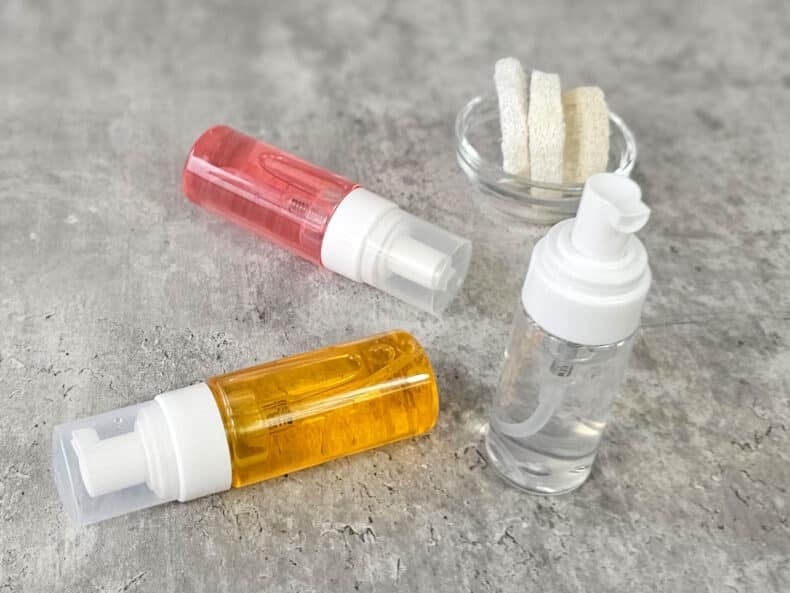
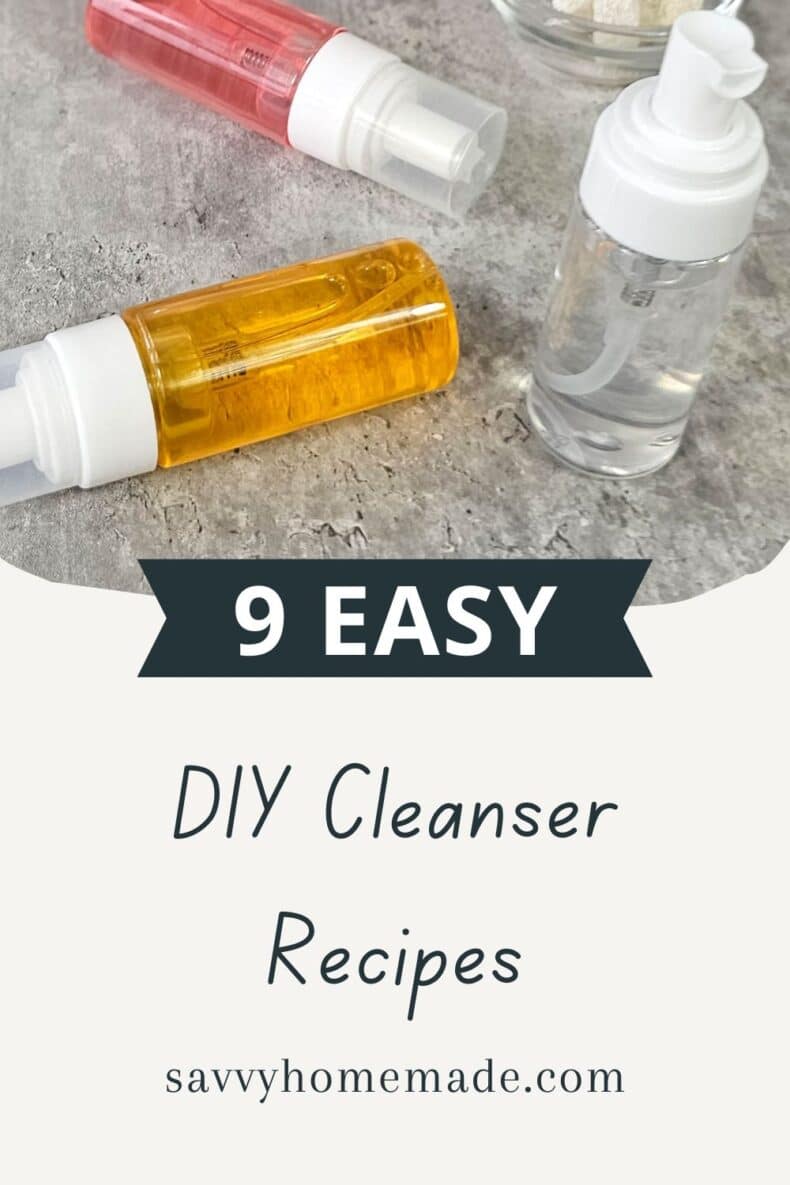
A foaming cleanser is a thin liquid formula that turns into soft foam when dispensed through a special foamer pump bottle.
The bottle itself does all the work of whipping air into the cleanser as it’s pumped out, this instantly turns the liquid into a light airy foam. The formula doesn’t need heavy thickeners or complicated ingredients.
Foamer bottles can sometimes be a little more expensive than standard bottles, but they are reusable and can last for years, making them a good investment for future recipes.
The result is a soft foaming face wash that spreads easily across the skin, cleans very effectively & rinses away quickly.
Key Ingredients & Why We’ve Used Them
We have formulated this homemade face cleanser so that it’s suitable for all skin types. You can tweak the recipe to tailor it to suit a specific skin type such as dry, oily or mature.
In addition there are lots of water soluble botanical and functional powders that can be added to elevate this recipe. However as this is a wash off product we don’t advise adding too many expensive ingredients.
Water
Distilled water is simply water that has been purified through a distillation process. It’s been boiled into steam and condensed back into liquid, which removes minerals, metals, microorganisms and other impurities. In skincare formulation, we use it because it’s clean, stable and predictable. It won’t react with your ingredients or affect your preservative system.
Glycerin
Although when cleansing the point is to rid the skin of dirt and oils we don’t want to strip it completely. The glycerin will help to draw moisture into the skin to keep it plump and hydrated.
Even in a rinse off product like a foaming cleanser, a small amount of glycerin makes a noticeable difference to the finished cleanser. It softens the feel of the formula and helps counterbalance the surfactants
Surfactants
Both decyl glucoside and coco glucoside are mild, plant-derived surfactants made from sugar and coconut. They’re both considered gentle and suitable for sensitive skin, which is why they’re so popular in natural style formulations.
- Decyl glucoside is slightly milder and produces a light soft foam. It feels very gentle on the skin and is often chosen for sensitive or everyday cleansers.
- Coco glucoside is still gentle, but it has a little more cleansing strength and produces a slightly richer foam. It can make a formula feel a touch more “cleansing” without becoming too harsh.
Saliguard PPC Preservative
Because this is a water-based cleanser a preservative is essential. Saliguard PPC provides broad spectrum protection to keep the formula safe and stable during use, without being harsh on the skin.
Liquid Soap Coloring
This is a little optional extra. I like to change things up sometimes so I add one of drop soap dye.
Substitutions
- Distilled Water, hydrosols are a wonderful addition, substitute all are part of the water.
- Glycerin, panthenol would be a decent substitute. Use the liquid at the same rate. For the powdered, lower the usage rate to 1g and up the water by 4g. Dissolved in the water and continue to step 2.
- Decyl Glucoside, Caprylyl/capryl glucoside would be nice or leave it out and up the cocoa glucoside.
- Coco Glucoside Caprylyl/capryl glucoside or leave it out and up the decyl glucoside .
- Saliguard PPC Preservative, Liquid Germall Plus its water soluble and has a good pH range. Its usually used at 0.5% so you will need to adjust the amount from 1g to 0.5g
Watch The Video

As an Amazon Associate, I earn from qualifying purchases. If you buy via the links here I may earn a small affiliate commission at no cost to you, please read my affiliate disclosure.
Ingredients
Equipment
Method
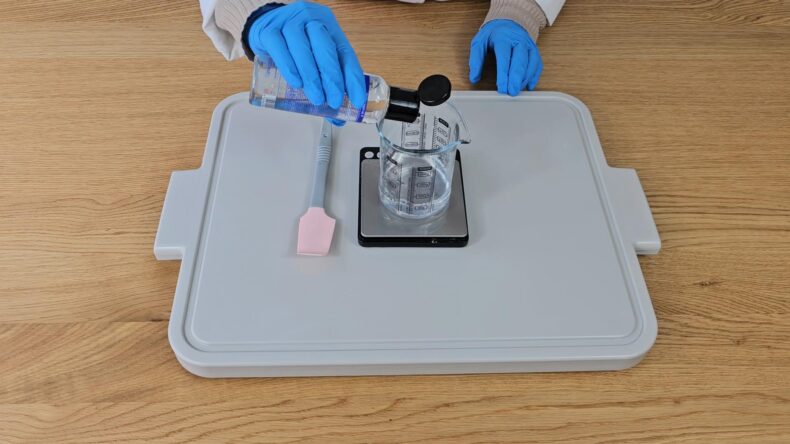
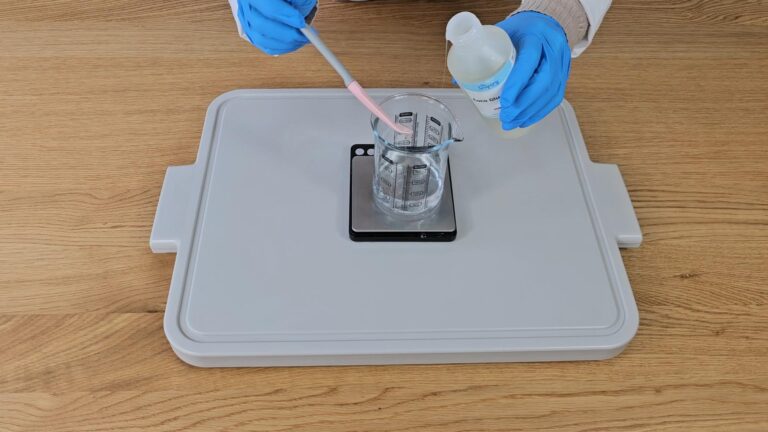
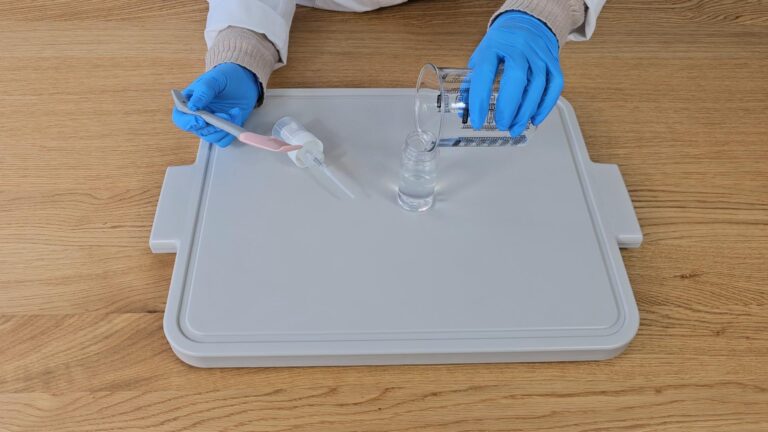
- 88 grams Distilled Water, 5 grams GlycerineCombine the water and glycerin into a clean beaker. Stir well to combine

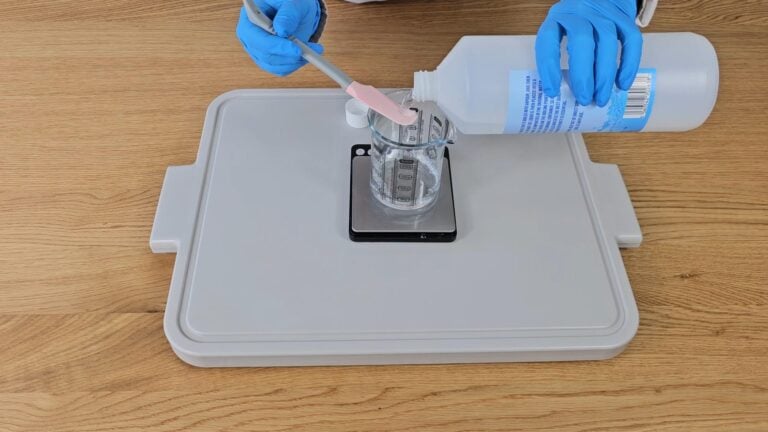
- 4 grams Decyl Glucoside, 2 grams Coco GlucosidePour the glucosides into the beaker with the water. Gentle stirring needs to be done here so as not to create too many bubbles.
- 1 gram SaliguardAdd the preservative and stir, once again trying not to create too many bubbles.
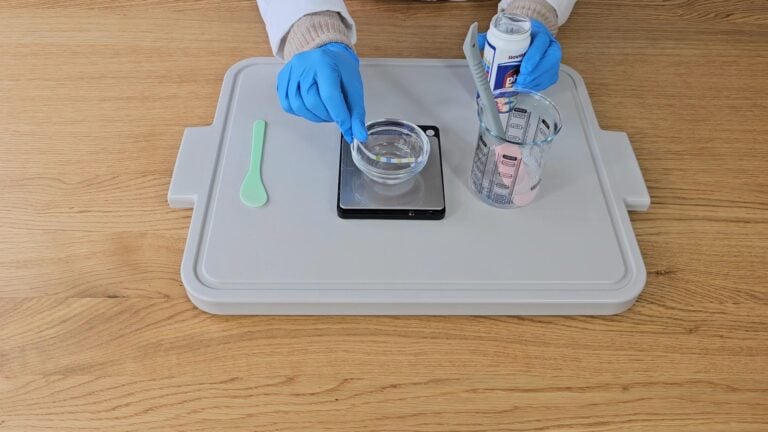
- Finally we need to check our pH. When using surfactants we always need to check the pH of the finished product to check that it's not too high. Dilute a small sample of the cleanser (1 part cleanser to 9 parts distilled water). Dip a pH strip into the diluted sample and check it reads pH 5.0–5.5. We found most of our foaming cleansers needed a small adjustment of around 6 drops to lower it. (see how to adjust bellow)
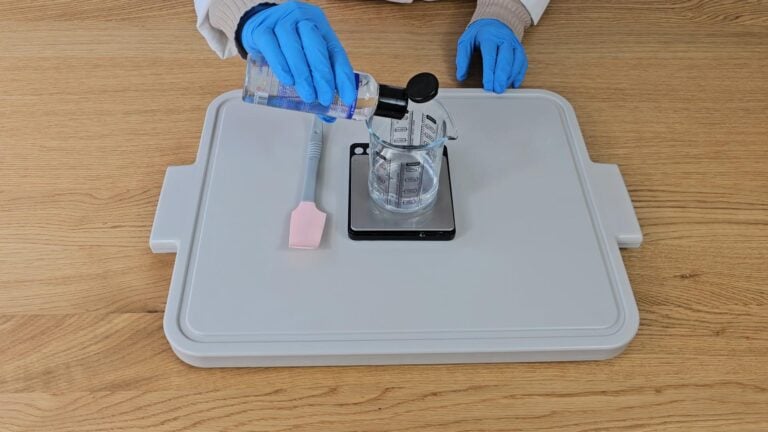
- Foamer BottleOnce you have the correct pH balance, transfer to a foamer bottle.
Notes
New to DIY skincare?
If you’re enjoying making your own products, you might like Radiance, my free email course where I teach the foundations of DIY skincare step by step!More DIY Cleanser Recipes You Might Enjoy
• DIY Oil Cleanser – gentle oil-to-milk cleanser that melts away makeup.
• DIY Micellar Water – lightweight cleanser ideal for sensitive skin.
• Dry Skin Balm Cleanser – rich balm that transforms to a milky cleanser when rinsed.
• Cleanser for Aging Skin – moisturising, creamy cleanser that glides over the skin.
Browse all cleanser tutorials →
Homemade Cleanser Recipes
How to lower the pH
If the pH is too high, add a couple of drops of a 10% citric acid solution to the main batch of cleanser and stir gently until fully combined.
Take a fresh small sample, dilute again (1 part cleanser to 9 parts distilled water), and re-test the pH. Repeat if needed until the pH is 5.0–5.5.
Recipe Adjustments For Skin Type
Mature skin
We can lower the surfactant to make it less stripping, and up the glycerin for more hydrating. We can also replace some of the distilled water with a Rose hydrosol that adds a soft, calming feel and makes it feel more luxurious.
The recipe looks like this; 45g Distilled Water – 44g Rose Hydrosol – 6g Glycerin – 4g – Decyl glucoside – 1g Saliguard PPC Preservative.
Oily skin
Our oily skin cleanser has a slightly higher surfactant for better cleansing power, but still gentle. We can substitute around half of the water for Witch Hazel Hydrosol, try to get the alcohol free one. You could also add an optional 0.2–0.3% of niacinamide if you wanted to elevate it more but for now lets keep it simple.
The recipe looks like this; 47g Distilled Water – 40g Witch hazel Hydrosol – 4g Decyl Glucoside – 4g Coco Glucoside – 4g Glycerin – 1g Preservative
Dry Skin
Here we are adding a little extra humectant, and lowering the surfactant. We also feel adding aloe vera gel would be a lovely addition.
The recipe looks like this; 82g Distilled Water – 5g Glycerin – 7g Aloe Vera gel – 5g Decyl GlucosidNo extras.
Sensitive Skin
This one is super simple. We are going for low and only one surfactant. We are also going to lower the glycerin. This one is so mild that I often use it as an eyelash wash.
The recipe looks like this; 93g Distilled Water – 2g Glycerin – 4g Decyl Glucoside – preservative.
How to use this foaming cleanser
- Pump 1–2 pumps of foam into damp hands. Because you’re using a foamer bottle, the product will already come out light and airy so you don’t need much.
- Gently massage the foam onto damp skin using small circular movements. There’s no need to scrub. Let the surfactants do the work of lifting away dirt, excess oil and daily build-up.
- Rinse thoroughly with lukewarm water, then gently pat your skin dry with a clean towel.
- Follow with your usual toner, serum or moisturiser.
How to store it
Store in a cool, dry place, away from direct sunlight, and place the lid on after each use. With a proper preservative such as Saliguard PPC, you can generally expect a shelf life of around 6 months.
Types of Homemade Facial Cleansers (And Which One Is Best?)
Not all cleansers work in the same way. The texture, ingredients, and cleansing strength can vary depending on the type of cleanser you choose. When making your own homemade facial cleanser, it’s helpful to understand the different styles so you can pick one that suits your skin.
Here are the most common types of DIY face cleansers.
Gel Cleansers
Gel cleansers have a slightly thicker texture and usually feel very fresh and cooling on the skin. They often contain soothing ingredients such as aloe, botanical extracts, or humectants.
These homemade cleansers are particularly popular for oily or sensitive skin, as they tend to feel light while still cleansing properly.
Foaming Cleansers
Foaming cleansers are lightweight liquid formulas that create a soft foam when dispensed through a foamer bottle. They use gentle surfactants to lift away dirt, excess oil and daily grim build up.
This style is often the easiest to make and works well as a homemade face cleanser for daily use, because it cleans effectively without feeling heavy on the skin.
Cream Cleansers
Cream cleansers are richer and more moisturising. They often contain nourishing oils, emulsifiers & fatty alcohols that give them a soft lotion like texture.
They’re a great choice for dry or mature skin, as they cleanse gently without leaving the skin feeling tight.
Oil and Balm Cleansers
Oil based cleansers and cleansing balms work by dissolving makeup, sunscreen, and excess oil on the skin. When water is added many formulas turn milky and rinse away easily.
These are excellent for removing makeup and SPF, and are often used as the first step in a double cleansing routine.
Powder Cleansers
Powder cleansers are a water-free alternative that activate when mixed with water in your hands. They often contain gentle surfactants, clays or soothing ingredients like oats.
Because they contain no water, they don’t require preservatives and tend to have a very long shelf life.
Try These Homemade Facial Cleanser Recipes
While this recipe makes a gentle everyday homemade facial cleanser, you might also enjoy some of the more targeted cleansers we’ve shared on the blog. Each one is designed for a specific skin type or skincare goal.
-
Natural Homemade Face Wash for Glowing Skin (Powder Cleanser)
Learn how to make a natural homemade face wash for glowing skin. This DIY powdered cleanser is gentle, preservative-free, and suitable for all skin types.
Read More -
DIY Facial Cleanser for Aging or Mature Skin (Creamy & Moisturising)
Make a DIY facial cleanser for aging or mature skin. This creamy, moisturising formula gently cleanses without drying or dragging delicate skin.
Read More -
Homemade Cleanser for Sensitive Skin (Cooling Gel Wash)
Make a homemade cleanser for sensitive skin with this gentle, fragrance-free cooling gel wash. Cleanses softly without stripping or irritation.
Read More -
My Fruity Balm to Milk Cleanser Recipe
Make this fruity balm to milk cleanser that melts makeup away and rinses clean with no residue. An easy DIY oil-to-milk cleansing balm recipe.
Read More -
Homemade Cleanser For Oily Skin (Sulfate-Free Foaming Gel Cleanser)
Make a DIY cleanser for oily skin. This sulphate-free, foaming gel formula gently removes excess oil without tightness and is perfect for daily use.
Read More -
A Homemade Cleanser For Dry Skin – Cleansing Balm Recipe
Learn how to make a homemade cleanser for dry skin with this nourishing oat & lavender cleansing balm recipe. Gently removes makeup without stripping.
Read More -
DIY Oil Cleanser: A Simple Oil-to-Milk Recipe That Rinses Clean
Learn how to make a simple DIY oil cleanser that melts makeup and sunscreen, then turns milky and rinses clean. Beginner-friendly, water-free, and suitable for all skin types.
Read More -

Radiance DIY Micellar Water Lesson
DIY Micellar water is often the first skincare product people make that feels both simple and slightly mysterious. It looks like water, it feels gentle,…
Read More



Final Thoughts
This simple DIY foaming cleanser is one of the easiest ways to start making your own skincare. With just a few ingredients and a foamer bottle, you can create a gentle daily cleanser that feels fresh, effective and balanced.
The recipe is purposely minimal, so it works well for most skin types. From here, you can begin experimenting by swapping part of the water for hydrosols or adjusting the surfactants, or adding simple functional ingredients to suit your own skin better.



Hi ANGELA , great Homemade Facial Cleanser Recipes. I like it