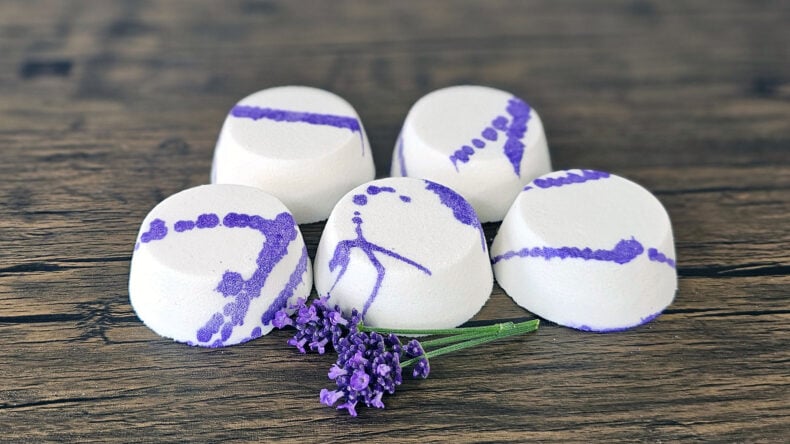
These gorgeous DIY shower steamers are such a simple and lovely way to make an everyday shower feel luxurious. As they slowly fizz, they release their essential oils into the warm steam, filling the shower with a beautiful fragrance.
And my favorite thing is how DIY shower steamers are made with just a handful of basic ingredients! Baking soda and citric acid create the familiar fizzing reaction, while kaolin clay helps hold the fragrance and produces a harder, more durable steamer.
Watch It Being Made

Why You’ll Love These DIY Shower Steamers
These steamers are surprisingly easy to make, but they look and feel like something you might find in a spa or gift shop.
They also make a lovely homemade gift, particularly when they’re decorated with a coordinating mica color and packaged in a sealed bag or airtight container.
Depending on where you position the steamer and how much water reaches it, you may also be able to use each one for more than one shower.
You’ll notice that I’m not shy with the essential oils at all! I mean, I feel like it’s the whole point of a shower steamer. We’re using them at around 4%, which gives the finished steamers a noticeable aroma rather than a scent that disappears as soon as the water starts running.
I’ve used lavender essential oil for this particular batch. It’s a wonderful all-rounder, has a calming aroma and is one of the more economical essential oils to work with. I don’t know about you, but don’t like using my expensive oils in a homemade shower steamer. But no judgement from me, you can easily replace it with your own favorite essential oil or blend.
What Is A Shower Steamer?
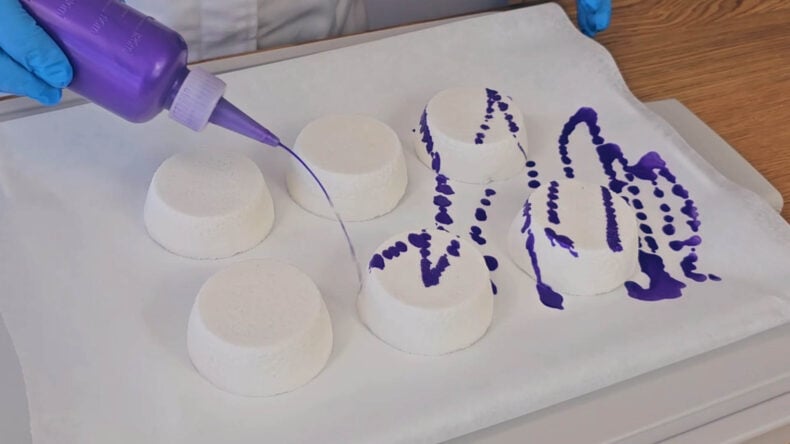
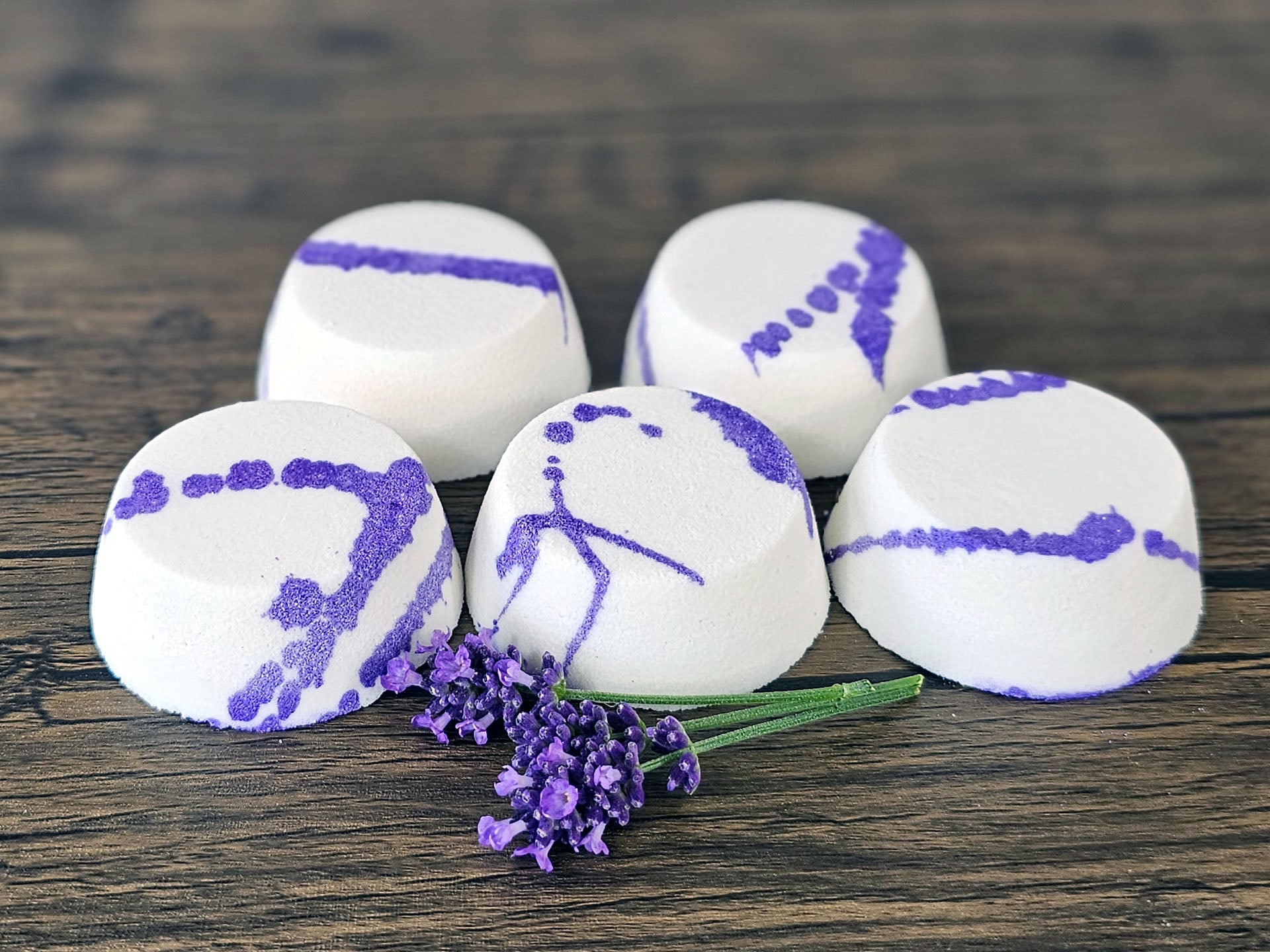
A shower steamer is a fragranced tablet that slowly fizzes when it comes into contact with water.
Its similar to a homemade bath bomb. but you place it on the floor of the shower, close enough to the water to receive the occasional splash but away from the direct stream.
As it becomes wet, the baking soda and citric acid react and begin to fizz, helping to release the essential oils into the warm shower steam.
The basic process is similar to making a bath bomb, but this recipe is all about producing a strong and noticeable aroma in the shower. We aren’t adding any additional carrier oils, and the essential oils make up approximately 4% of the recipe.

As an Amazon Associate, I earn from qualifying purchases. If you buy via the links here I may earn a small affiliate commission at no cost to you, please read my affiliate disclosure.
Ingredients
Equipment
Method
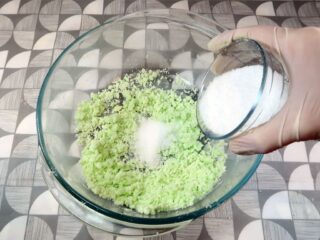
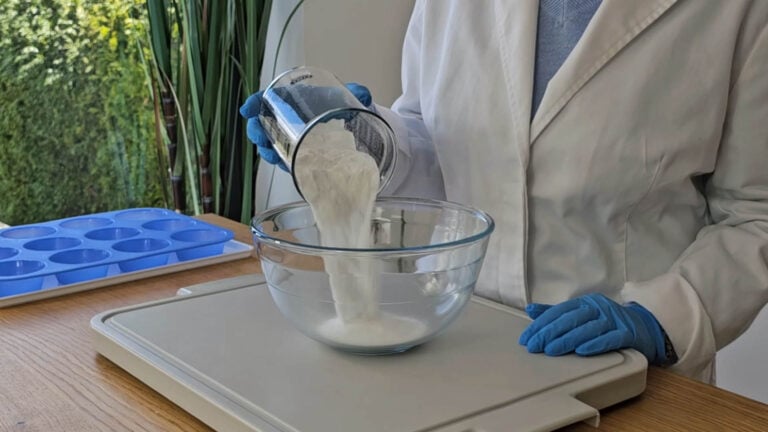
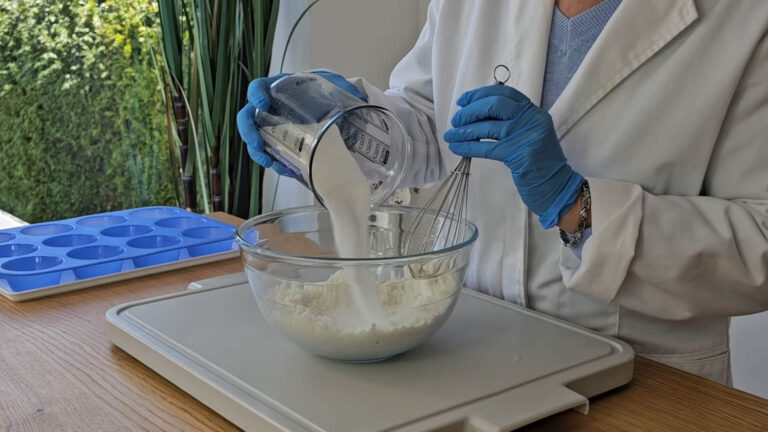
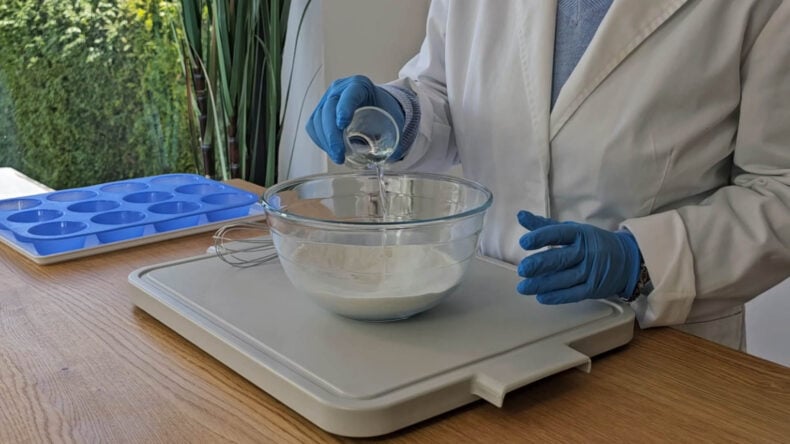
- 284 grams Baking Soda, 18 grams Lavender Essential Oil, 10 grams Kaolin ClayBefore you begin mixing the dry ingredients, weigh the essential oil into a small glass container. Set it to one side until you are ready to use it.Place the baking soda and kaolin clay into your mixing bowl. Stir them together until they are thoroughly combined.Pass any particularly lumpy ingredients through a sieve before adding them to the bowl.

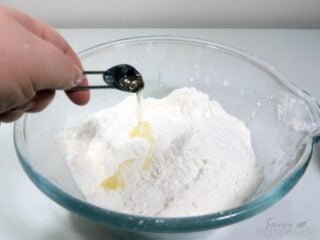
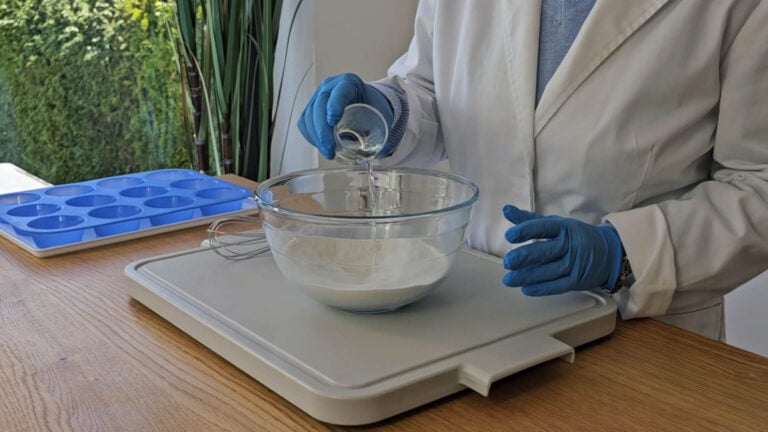
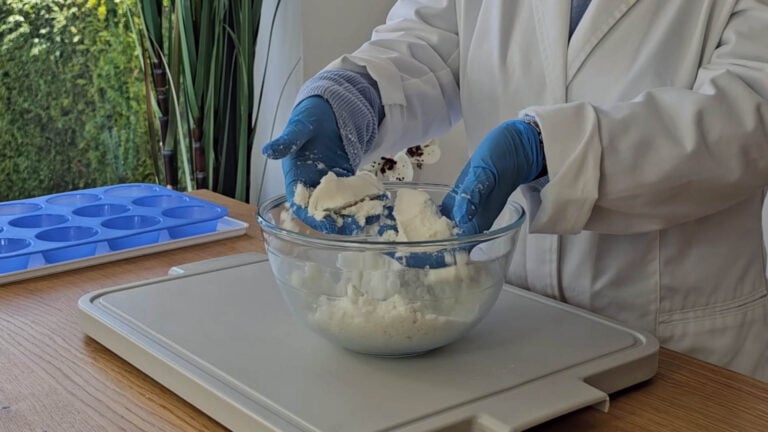
- Sprinkle the essential oil over the baking soda and clay.Mix thoroughly until the oil is evenly dispersed. You can use a hand whisk or get your hands into the mixture and give everything a good mix.Working the mixture with your hands is particularly helpful for breaking apart any oily lumps or clumps.Baking soda can feel quite harsh on the hands, so always wear disposable gloves while handling the mixture. Gloves are especially important at this stage because we are working with a relatively high amount of essential oil.
- 142 grams Citric AcidOnce the essential oil has been fully dispersed, add the citric acid.Mix everything thoroughly with your whisk or gloved hands until all the powders are evenly combined.It is important to add the citric acid after incorporating the essential oil. This prevents the oil from creating isolated damp areas around the citric acid, which could trigger premature fizzing.Take your time and make sure there are no pockets of unmixed powder. A thoroughly combined mixture will help your DIY shower steamers perform consistently.
- When everything is properly combined, the mixture should feel similar to damp sand.Squeeze a handful in the palm of your hand. It should hold its shape when you release it.When the mixture crumbles apart immediately, give it a light spritz with isopropyl alcohol, mix thoroughly and test it again.Only add a small amount at a time. The aim is to use just enough alcohol to help the powders hold together.
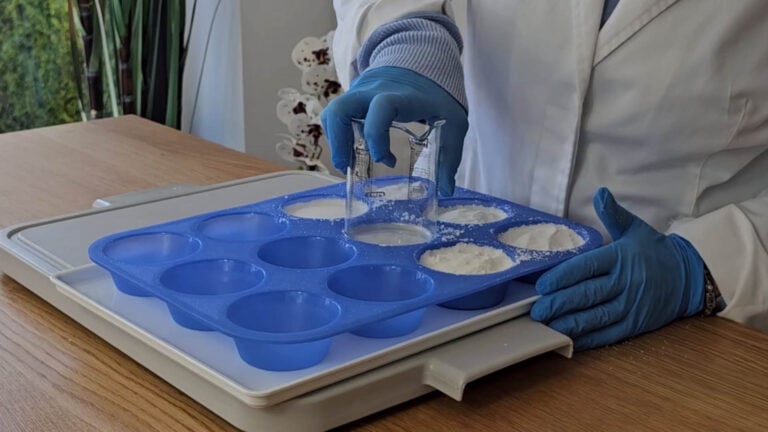
- Begin filling the cavities of your silicone mould a little at a time.Press the mixture down firmly as you work. Compacting each layer helps remove air pockets and creates stronger shower steamers that are less likely to crumble.We managed to make six homemade shower steamers from this batch.For a smooth and level finish, use the flat bottom of a glass or small container to gently press down the tops.
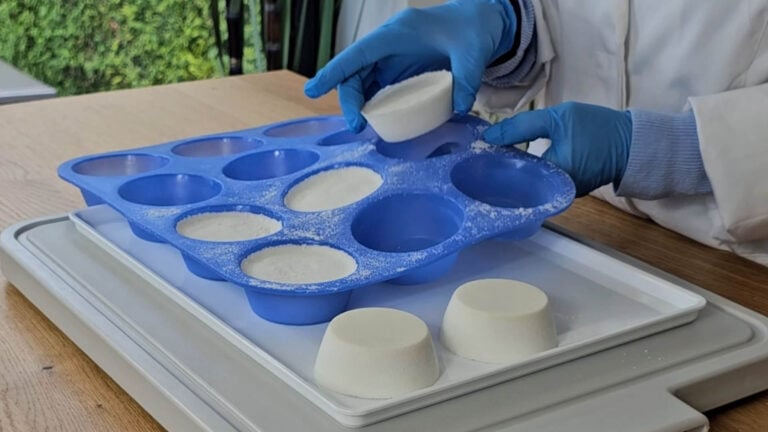
- Leave the shower steamers inside the mold for at least 24 to 48 hours.As they dry, the clay should help the steamers shrink slightly away from the sides of the mould, making them easier to remove.Do not rush this stage. Removing the steamers before they have hardened properly can cause them to crack or crumble.
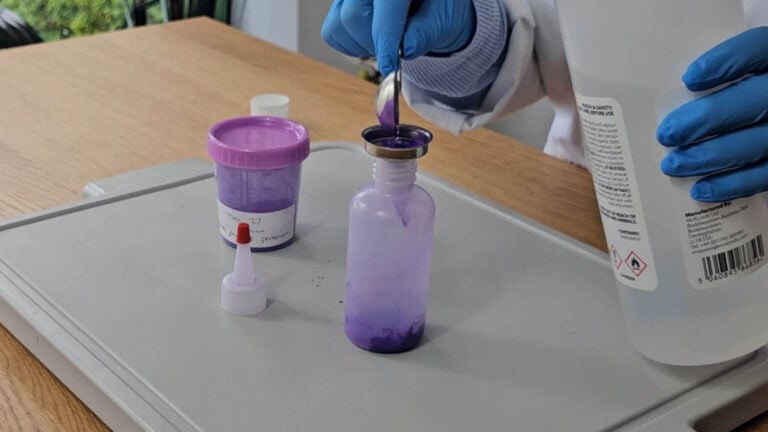
- 10 grams isopropyl alcohol, 2 grams Mica PowdersMix approximately 1 teaspoon of mica with 4 teaspoons of isopropyl alcohol in a small squirty bottle.Shake the bottle thoroughly until the mica is completely dispersed.You can test the mixture by squirting a small amount onto a piece of baking parchment. When it appears too thick, add a little more alcohol. When the colour is not vibrant enough, add a little more mica.When you do not have a suitable squirty bottle, mix the mica and alcohol in a small beaker or glass container and use a pipette to drizzle it over the steamers.
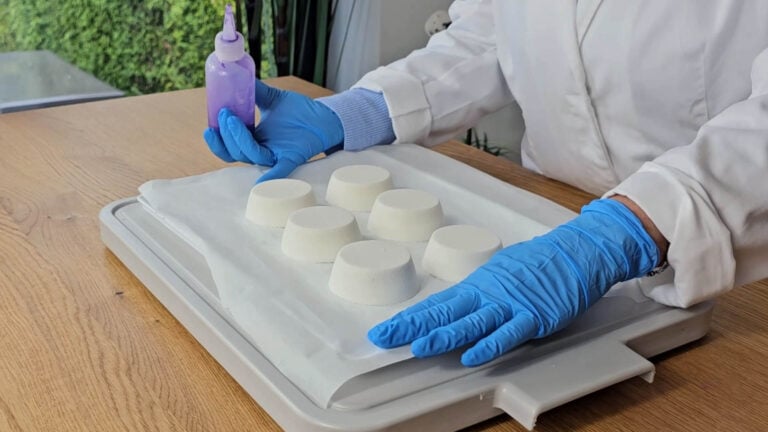
- Place the dried shower steamers on a tray lined with baking parchment.A cooling rack works particularly well if you have one because it allows any excess mica mixture to drip away from the steamers.
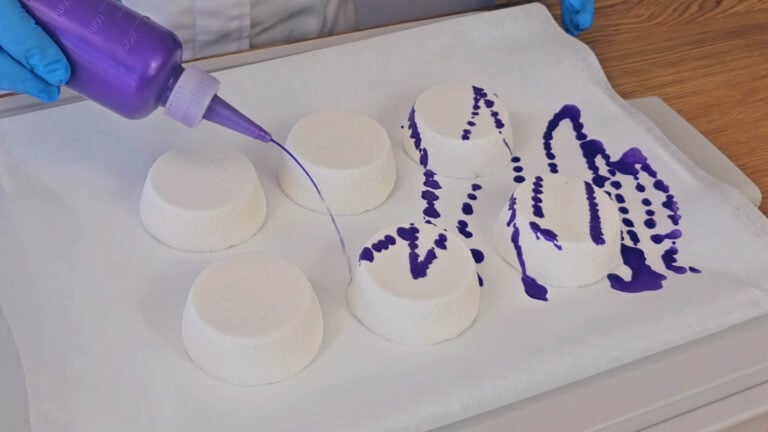
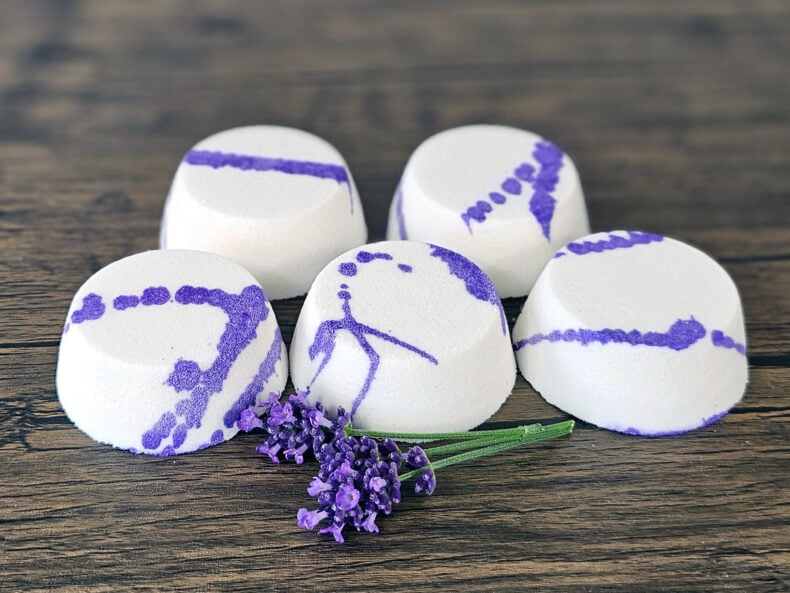
- Starting at one corner, gently squeeze the mica mixture from the bottle while moving your hand in a smooth zig-zag motion over the shower steamers.Continue until all the steamers have been decorated to your liking.The lines do not need to be perfectly straight or uniform. Small variations in the pattern can make the finished steamers look more interesting and eye-catching.
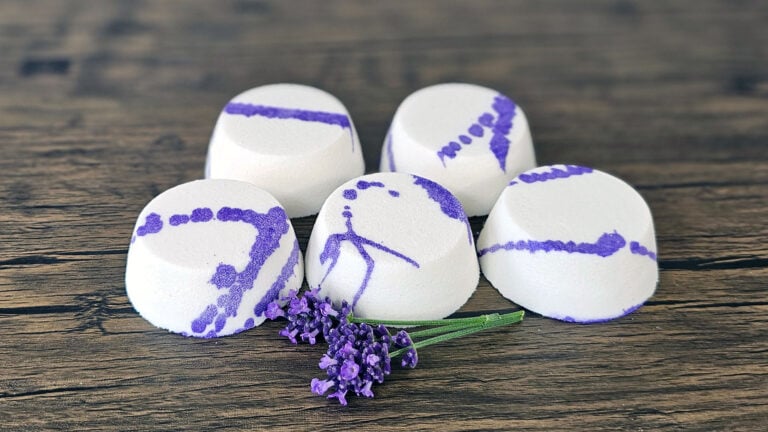
- Leave the decorated steamers uncovered until the isopropyl alcohol has evaporated and the mica decoration is completely dry.They are then ready to use or package.
New to DIY skincare?
If you’re enjoying making your own products, you might like Radiance, my free email course where I teach the foundations of DIY skincare step by step!A Closer Look At Shower Steamer Ingredients
Although the ingredient list is quite short, every ingredient has an important job to do.
Baking Soda
Baking soda, also known as bicarbonate of soda, forms the foundation of most DIY shower steamer recipes.
It reacts with the citric acid when exposed to water, creating the fizzing action that helps release the fragrance into the shower steam. It also provides most of the bulk and creates a smooth mixture that is easy to press into the mould.
Citric Acid
Citric acid is the ingredient responsible for making our shower steamers fizz.
It is available in several different forms, including large grains, fine grains and powder. They can all be used in shower steamers and bath bombs and can generally be substituted like for like.
However, they can create slightly different finishes. The finer the citric acid, the smoother the finished shower steamer is likely to be.
We’ve found powdered citric acid to be the most forgiving and capable of producing the most professional-looking finish. The downside is that it can be more expensive and slightly harder to source.
Citric acid powder can also become airborne quite easily, particularly when it is lumpy and needs to be passed through a sieve. I usually wear a face mask while handling it.
Kaolin Clay
Kaolin clay has two important functions in this recipe.
Firstly, it helps hold the essential oil fragrance within the shower steamer, keeping the scent fresher for longer.
Secondly, it helps the steamers become harder and more durable. This makes them easier to remove from the mould and increases the chance of getting more than one shower from each steamer.
As the steamers dry, the clay also helps them shrink slightly away from the sides of the mould.
Essential Oil
Essential oils are what give shower steamers their wonderful fragrance, so for me, they are one of the most important parts of the recipe.
After all, if you are going to fill your shower with fragrance, you want to be able to smell it.
We use essential oils at 4% in this recipe. Some commercial shower steamers contain much less, often as a way to reduce the cost of producing them. While that may work for some products, I find the finished fragrance can sometimes feel a little underwhelming.
I would much rather use a little more and create a shower steamer that properly fills the shower with scent and feels like a genuine treat to use.
A stronger fragrance can also help the aroma remain noticeable when you manage to get more than one shower from a steamer.
Isopropyl Alcohol
Isopropyl alcohol, sometimes called rubbing alcohol, is used in two different ways.
A few light spritzes can help bring the shower steamer mixture together if it feels too dry. It is also mixed with mica to create the decorative finish.
The alcohol helps the mica spread easily across the steamers before quickly evaporating. This leaves the mica behind while minimising the risk of prematurely activating the fizzing reaction.
Mica
The mica is included purely for decoration.
It adds colour and visual interest to the finished shower steamers, giving them a more polished and professional appearance.
Because mica is available in such a wide variety of colours, you can coordinate the decoration with the fragrance or theme of your steamers. For example, I’ve used purple mica with lavender essential oil.
Choosing Your Essential Oils
I’ve deliberately kept the essential oil choice simple in the main recipe and used lavender on its own.
Lavender is an excellent all-rounder with a calming aroma, and it is generally one of the more economical essential oils to use in larger quantities.
However, there is no reason you cannot replace it with another suitable essential oil, create your own combination or use a ready-made essential oil blend.
Here are a few of my favorite combinations. Each blend makes the 18g required for one complete batch of homemade shower steamers.
Evening Retreat Recipe
A relaxing, grounding fragrance that is lovely for evening showers.
9g lavender essential oil
6g bergamot essential oil
3g patchouli essential oil
Citrus Burst Recipe
A bright citrus blend that is ideal for a morning wake-up.
8g sweet orange essential oil
6g grapefruit essential oil
4g May Chang essential oil, also known as Litsea cubeba
Forest Spa Recipe
A fresh, woody and grounding combination.
8g black spruce essential oil
6g grapefruit essential oil
4g cedarwood essential oil
Refreshing And Clearing Recipe
A crisp, clean and refreshing blend.
8g peppermint essential oil
6g rosemary essential oil
4g tea tree essential oil
How To Use Shower Steamers
Place one shower steamer on the floor of your shower.
Keep it away from the direct stream of water, but position it close enough to be lightly splashed. As the steamer becomes wet, it will slowly fizz and release its fragrance into the shower steam.
For the best experience, use a warm to hot shower. The steam will help disperse the aroma throughout the shower enclosure.
Depending on its position and the amount of water reaching it, one shower steamer may last for one or two showers.
Placing it directly beneath the running water will make it dissolve much more quickly. Moving it further away will create a slower fizz and may help it last longer.
How To Store Shower Steamers
Moisture is the biggest enemy of finished shower steamers.
Store them in an airtight container or sealed bag in a cool, dry location, away from humidity and direct sunlight.
Leaving them exposed to moisture can cause the steamers to soften, lose some of their fizz or begin reacting prematurely.
When stored correctly, they should remain at their best for around 12 months.
They may still be usable after this time, but the essential oil fragrance will gradually fade and the fizzing action may become less vigorous.
Troubleshooting Homemade Shower Steamers
The Mixture Will Not Hold Together
Give the mixture one or two light spritzes of isopropyl alcohol, mix thoroughly and repeat the squeeze test.
Avoid adding a large amount in one go. You only need enough to help the mixture hold its shape.
The Mixture Is Starting To Fizz In The Bowl
This usually means the citric acid has come into contact with too much moisture.
Make sure you disperse the essential oil fully into the baking soda and clay before adding the citric acid. When additional moisture is needed, use a very light spritz of isopropyl alcohol rather than saturating the mixture.
The Steamers Are Crumbling
The mixture may not have been compacted firmly enough, or the steamers may need longer to dry.
Press the mixture down firmly as you fill the mould and leave the finished steamers for the full 24 to 48 hours before attempting to remove them.
The Surface Looks Rough
The grade of citric acid can affect the final appearance.
Large-grain citric acid can create a more textured surface, while fine or powdered citric acid generally produces a smoother and more professional finish.
The Mica Mixture Is Too Thick
Add a little more isopropyl alcohol and shake or stir it thoroughly.
Test the mixture on baking parchment before decorating the steamers. It should be fluid enough to drizzle or squirt easily without completely losing its colour.
A Simple Way To Upgrade Your Shower Steamers
I love how much fragrance these shower steamers produce from such a simple recipe.
The lavender version is a lovely place to start, but changing the essential oil blend and coordinating mica colour gives you plenty of room to experiment. You could make a bright citrus batch for morning showers, a grounding woody blend or something crisp and refreshing.
Once you have mastered the basic method, they are easy to customize, package and give as gifts, or simply keep beside the shower whenever you feel like turning an ordinary morning into something a little more special.