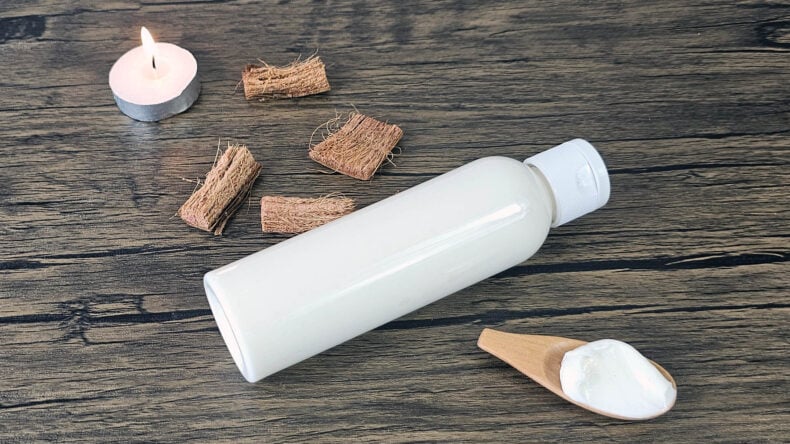
If you love the feel of coconut oil but find it a little too heavy on its own, this coconut oil lotion recipe is a lovely way to enjoy all the benefits in a more balanced and skin-friendly way.
By blending coconut oil with some lighter oils, and hydrating ingredients, we can make a natural body lotion that feels nourishing without being too heavy on the skin. It’s soft, creamy and absorbs beautifully, ideal for everyday use across most skin types.
If you’re new to lotion making, it’s worth starting with our homemade body lotion guide, where we walk through the basics and how to make a stable cream before moving on to more targeted recipes like this one.
Watch It Being Made

Spotlight On The Benefits
This DIY coconut oil lotion is simple, effective and a great all-rounder, especially if you want something that feels both comforting and lightweight.
- Nourishing coconut oil lotion that softens and conditions skin.
- Lightweight, balanced formula that absorbs without feeling greasy.
- Hydrates, and helps maintain moisture throughout your day.
- Smooth, creamy texture that glides easily onto the skin.
- Made with natural oils and simple skin-friendly ingredients.
- Suitable for most skin types, including normal and slightly dry skin.
- Gently scented with a fresh floral and citrus blend.
- Easy to follow coconut oil lotion recipe that’s great for beginners.

As an Amazon Associate, I earn from qualifying purchases. If you buy via the links here I may earn a small affiliate commission at no cost to you, please read my affiliate disclosure.
Ingredients
Equipment
Method
- 6 grams GlycerinePlace the distilled water and glycerin into one of the heatproof beakers, and give it a quick stir.

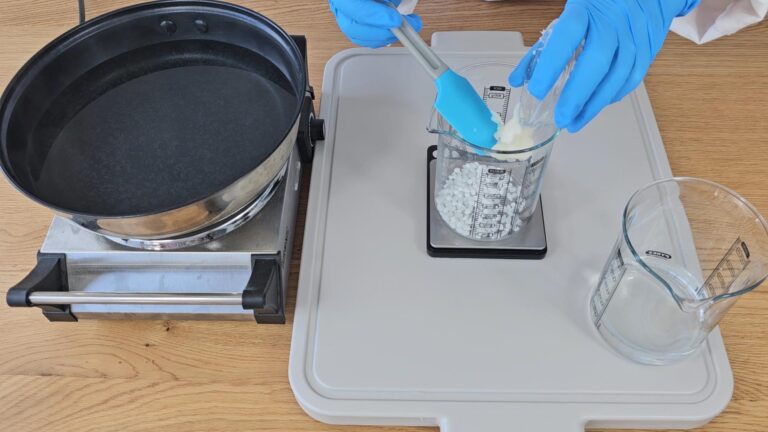
- 1 4 oz PET Plastic BottleIn a separate heatproof beaker place the BTMS 25, cetyl alcohol, coconut oil, jojoba, grapeseed and the olive squalane.
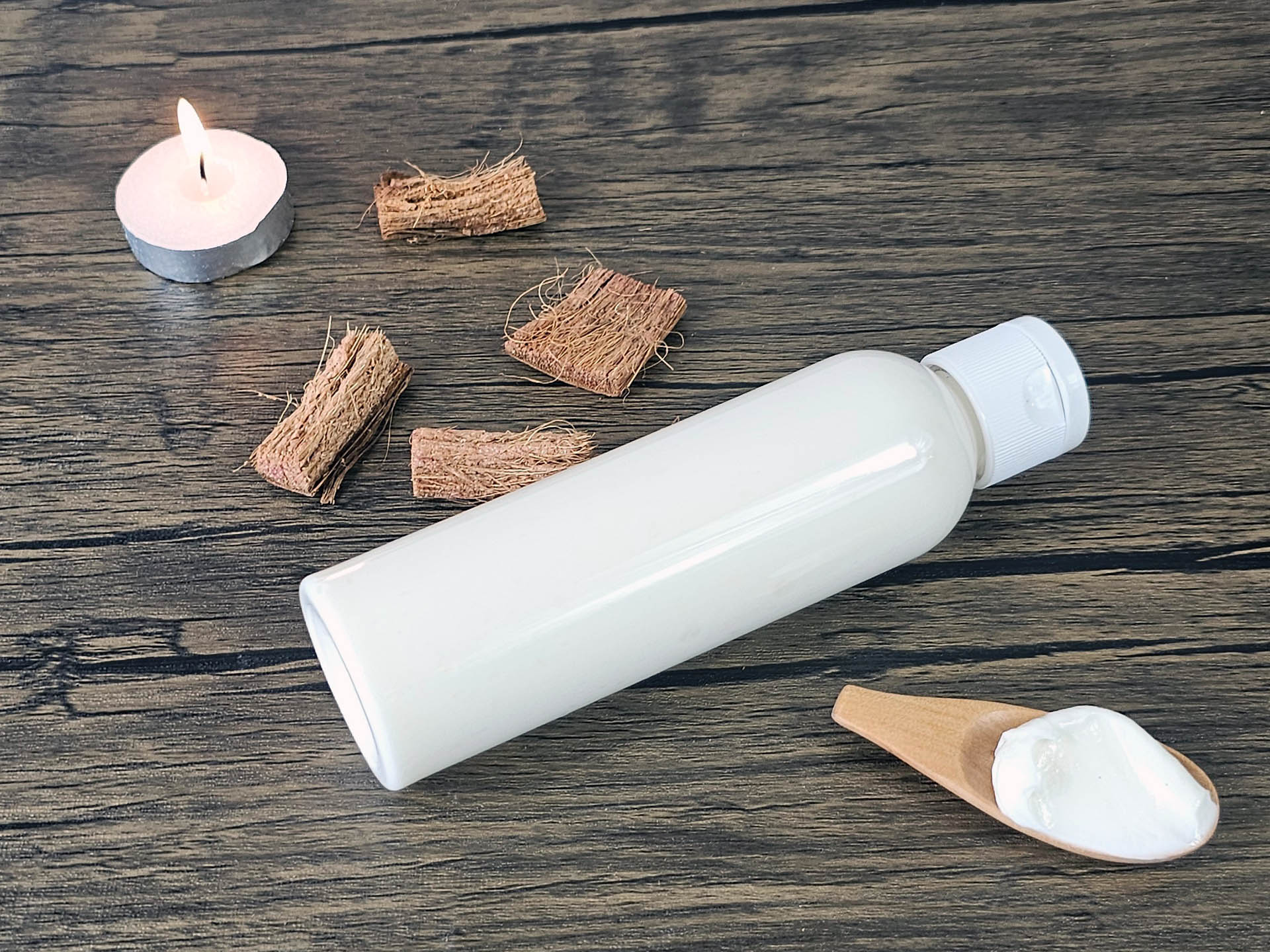
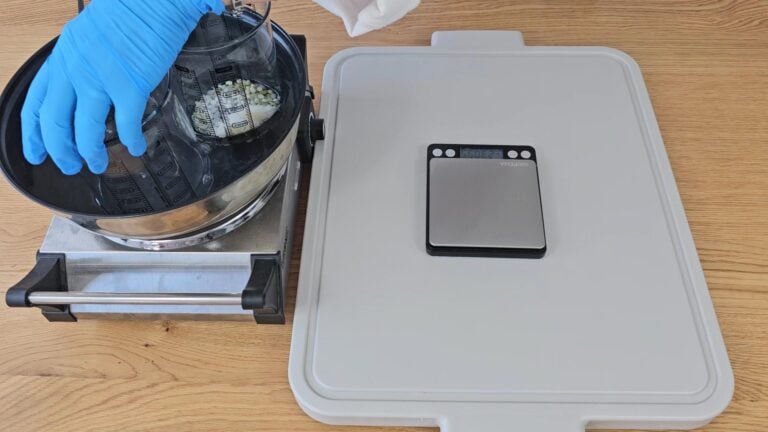
- Place both beakers into the water bath. A water bath consists of a shallow pan with a couple of inches of gently simmering water. Leave the beakers in the water bath until the waxes have melted and the water has heated through.
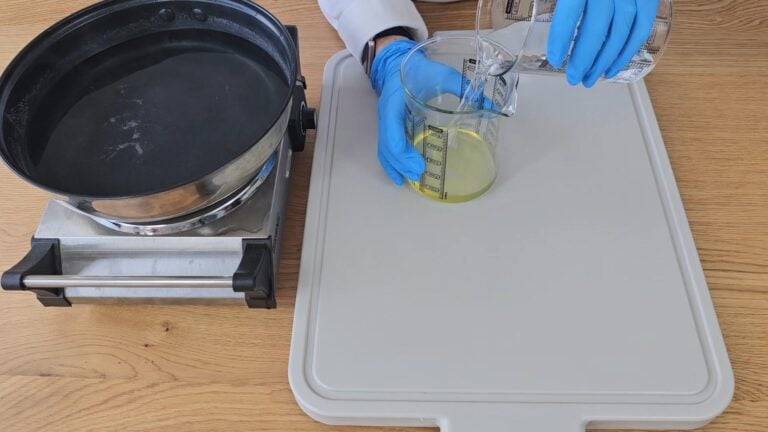
- Once melted remove the beakers from the heat and combine by pouring the beaker holding the water into the beaker holding the melted oils.
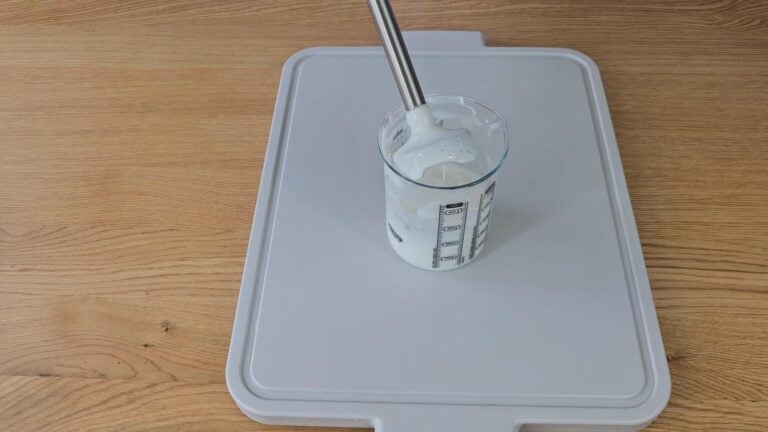
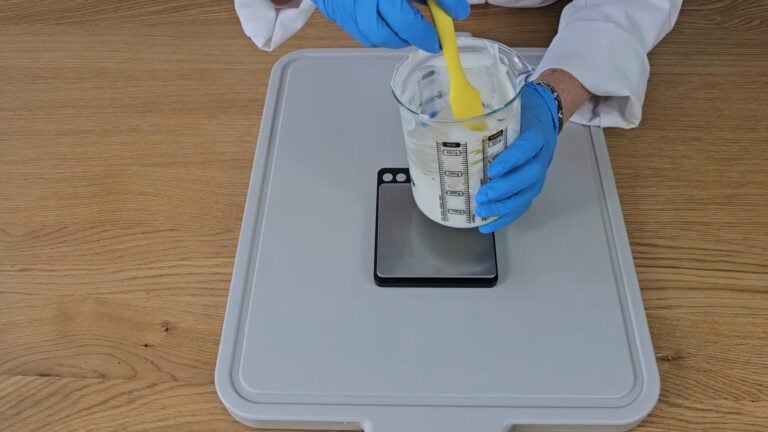
- Using a spatula and then blender, stir until the mixture has started to thicken and has fully mixed together, similar to runny cream. Then continue to stir on and off until the cream has cooled to below 40c ( 104f) which is around room temperature.
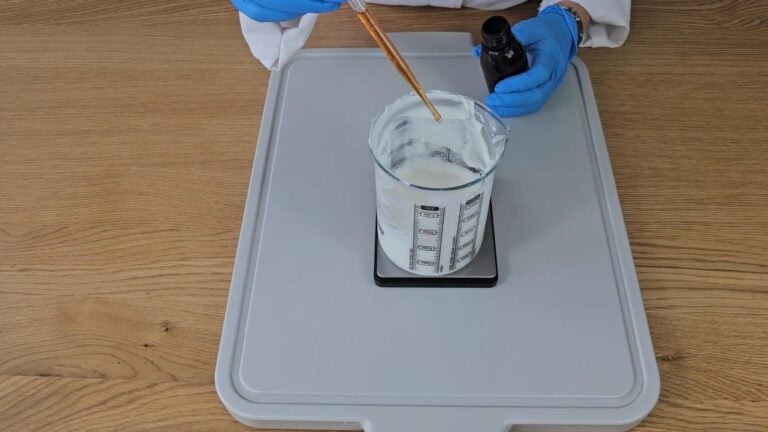
- When cooled add the vitamin E and stir it in.
- Next we can add the lavender and bergamot essential oils along with our preservative. Stir again to make sure everything has been fully combined.
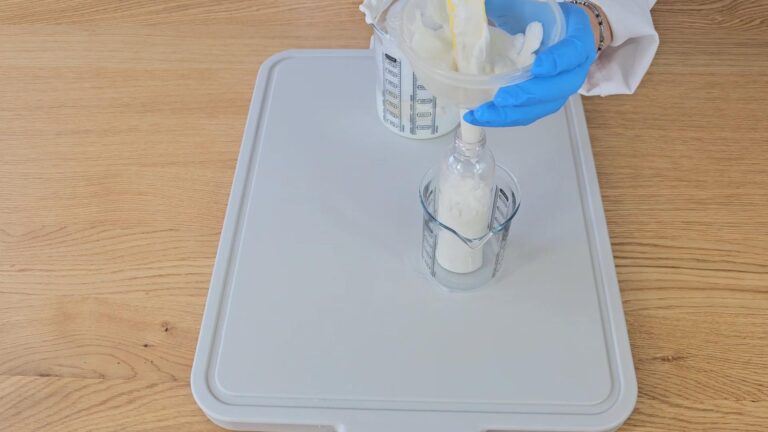
- Transfer to a clean sterile bottle or jar, ready for use.
New to DIY skincare?
If you’re enjoying making your own products, you might like Radiance, my free email course where I teach the foundations of DIY skincare step by step!
About The Ingredients
Glycerin
This is a humectant, which simply means it helps draw moisture into the skin and hold onto it. So instead of your lotion just sitting on the surface, glycerin helps keep your skin feeling hydrated for longer.
In this formula, we are using it at 6% which gives a really nice balance. It boosts hydration without making the lotion feel sticky or heavy, especially since we have paired it with some lighter oils like grapeseed and that silky touch from squalane.
BTMS 25 Emulsifying Wax
This is what holds our water and oils together, creating a smooth and stable lotion. It’s an easy emulsifier to work with and is well known for its superb conditioning properties, which really improve how the lotion feels on the skin. It gives a soft, silky glide and helps the lotion spread effortlessly, without any dragging.
Cetyl Alcohol
Cetyl alcohol is a fatty alcohol that helps give your cream a bit more body and structure, making it feel thicker and more stable. It also has some lovely skin benefits, helping to condition and soften the skin.
It adds a nice slip to the cream when applying, allowing it to glide over the skin more easily and giving the finished product a more luxurious feel.
Coconut Oil
On its own, coconut oil can sometimes feel a little heavy or not quite hydrating enough, but when balanced with our lighter oils and the glycerin, we end up with a lotion that has a nourishing feel, while still absorbing nicely into the skin.
In this recipe, at 10% it’s doing that lovely job of giving the lotion a bit of body and richness, without making it feel too much. It’s what gives that soft, creamy feel as you rub it in, but thanks to the other ingredients, it still sinks in beautifully.
Jojoba Oil
Jojoba oil is a really versatile ingredient and one I reach for often. It’s deeply moisturising but still feels light on the skin, making it perfect for lotions. What makes it special is how well it balances out other oils which makes it great if your skin is oily, dry or a bit unpredictable.
It’s also rich in vitamin E, giving a gentle antioxidant boost and helping keep skin looking healthy. All in all, it’s a great all-rounder that suits most skin types, and with a low comedogenic rating of 2, it’s not going to clog pores.
Grape seed Oil
Grape seed oil is super light, so it sinks in quickly and doesn’t leave that greasy or heavy feeling behind. just soft, comfortable skin.
In this recipe, as with the jojoba oil it’s doing a lovely balancing job. It helps take the edge off the richness of the coconut oil, so the lotion feels more “easy to wear” and not too much on the skin. Even in a simple formula, a small amount of grapeseed oil can help give it a more refined, lightweight finish.
Squalane
Olive squalane is a lovely lightweight, silky oil derived from olives. It has that beautiful, almost silicone feel on the skin, giving a really smooth glide, but unlike most silicones, it’s completely natural.
It’s one of those ingredients that just makes everything feel a bit nicer. It softens, smooths and helps the skin feel really comfortable without ever feeling heavy or greasy. You’ll often hear it called a “face lift in a bottle” which might be a bit of a stretch, but it definitely leaves your skin looking fresh and feeling its best.
What’s really nice about it is how it seems to suit just about everyone. It’s light enough for oily skin, gentle for sensitive skin, and still gives enough moisture for drier skin too. It just quietly does its job in the background, making your lotion feel that little bit more silky.
Vitamin E
Vitamin E helps care for both your skin and your formula. It’s packed with antioxidants which can help support and protect the skin, leaving it feeling soft and nourished. It also helps slow down the oxidation of your oils, which means your lotion stays fresher for longer and is less likely to go rancid too quickly.
Geranium and bergamot Essential Oil
Geranium and bergamot create a soft, fresh and gently uplifting scent, blending calming floral notes with a light citrus brightness, making it perfect for an everyday lotion that feels both relaxing and refreshing to use.
Substitutes
- Distilled Water, aloe vera juicewould be a nice addition.
- Glycerin, honey or a some D panthenol powder at 1%
- BTMS 25 Emulsifying Wax, most emulsifying waxes would work well. Just be aware that the fished product may be a little thicker or thinner.
- Cetyl Alcohol, Cetearyl Alcohol would be the obvious choice.
- Coconut Oil, this is our star ingredient so im not going to give a substitute for this one.
- Jojoba Oil, avocado would be nice, however anything you have to hand would still be good.
- Grape seed Oil, apricot kernel or you could leave this out and increase the jojoba or Squalane
- Squalane, increase the grape seed oil or the jojoba and leave it out.
- Vitamin E, this keeps the oils in the cream fresh. You could leave it out and use the cream within a couple of months or use rosemary extract.
- Geranium /Bergamot Essential Oil, you could use a different blend or a fragrance oil instead.
- Preservative Eco, any broad spectrum preservative. Check usage rate and adapt if need be.
Final Thoughts
This coconut oil lotion recipe is a great example of how a simple ingredient can be transformed into something much more wearable and versatile.
On its own coconut oil can feel a bit heavy, but when balanced with a selection of lighter oils like jojoba, grapeseed and squalane, it becomes part of a lovely smooth lightweight cream.
It’s also a really flexible recipe. You can adjust the oils, tweak the scent, or keep it completely fragrance-free, depending on your personal preference.
A simple, reliable homemade coconut oil lotion that’s easy to make and even easier to enjoy… every day!