
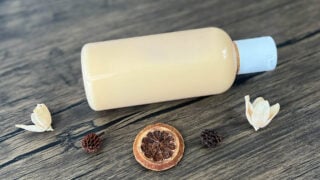
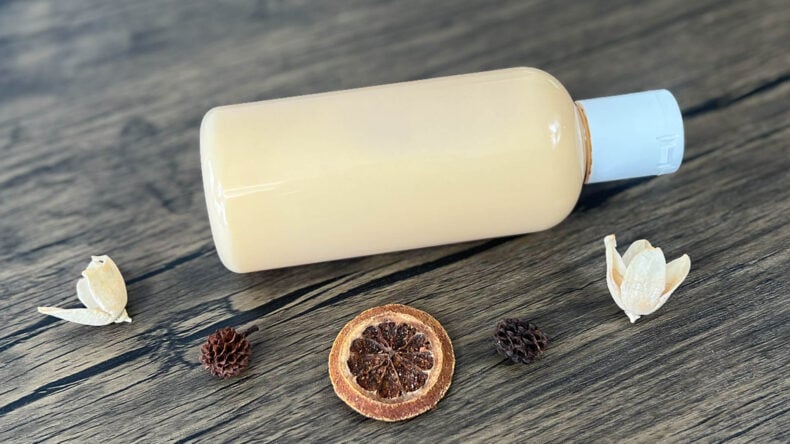
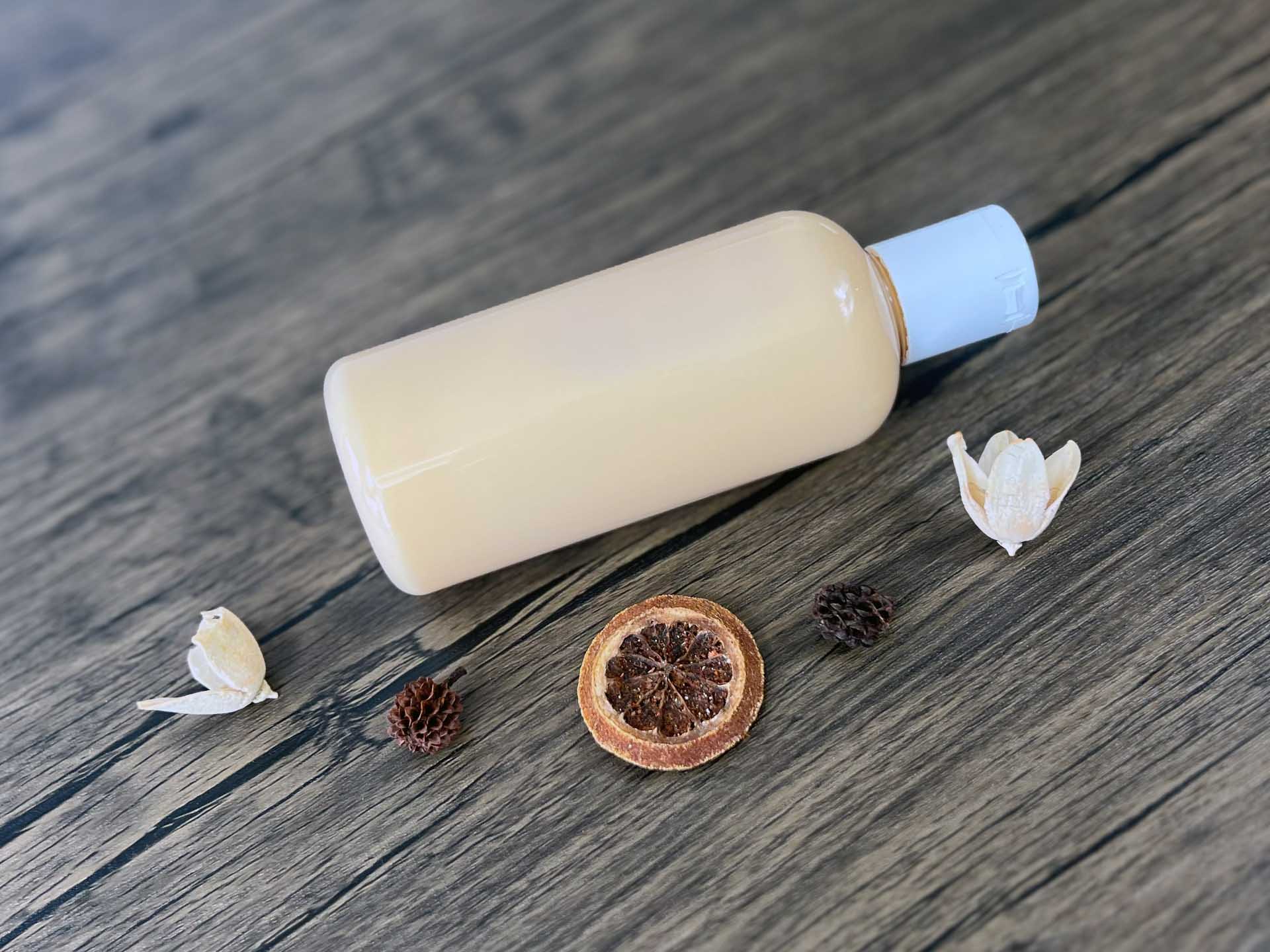
If you’ve been wanting to learn how to make body wash, this simple recipe is a lovely place to start. It’s gentle, beginner friendly, and designed to leave your skin feeling clean, soft and comfortable rather than tight or stripped.
Unlike many commercial shower gels that can feel so harsh or drying, this natural homemade body wash uses milder surfactants and skin-friendly ingredients to create a soft, nourishing cleanse. The texture is also super lightweight and easy to use, with a smooth lather that rinses away nicely.
One of the things I loved most about making this is how easy it is to customize. You can tweak the scent, swap out oils, or adjust the ingredients to better suit your own skin type or preferences.
It works amazingly in conjunction with your favorite DIY lotion to give your skin an extra oomph of skin-softening goodness.
Watch It Being Made

I’ve been making liquid soap using lye (potassium hydroxide) like crazy, as well as surfactant-based bubble bath and shower gels.
So I thought, how can I take this further? With a super creamy DIY body wash recipe! This recipe is basically me trying to do just that. It’s like a cross between a body wash, shower gel, and a creamy lotion, all in one.
Benefits of This DIY Body Wash
- Gentle DIY body wash recipe thats suitable for everyday use.
- Cleanses without leaving skin feeling stripped or too dry.
- Made with skin-friendly ingredients, and mild surfactants.
- Lightweight texture with a soft lather.
- Naturally inspired formula that can be customized.
- Suitable for most skin types, including normal and dry skin.
- Easy beginner friendly homemade recipe.
- Can be scented with your favorite essential oils or fragrance oils.
- Leaves skin feeling soft, refreshed and comfortable after washing.
Making My Homemade Body Wash
Lately, I’ve been keeping a bottle of this stuff by the bathtub that I scented with lovely lavender essential oil for relaxation. I have another one with refreshing orange essential oil that I use in the shower.
I always give them a dash of color so that I know which is which at a glance. Adding color to the body wash recipe is of course optional as they still look great without.
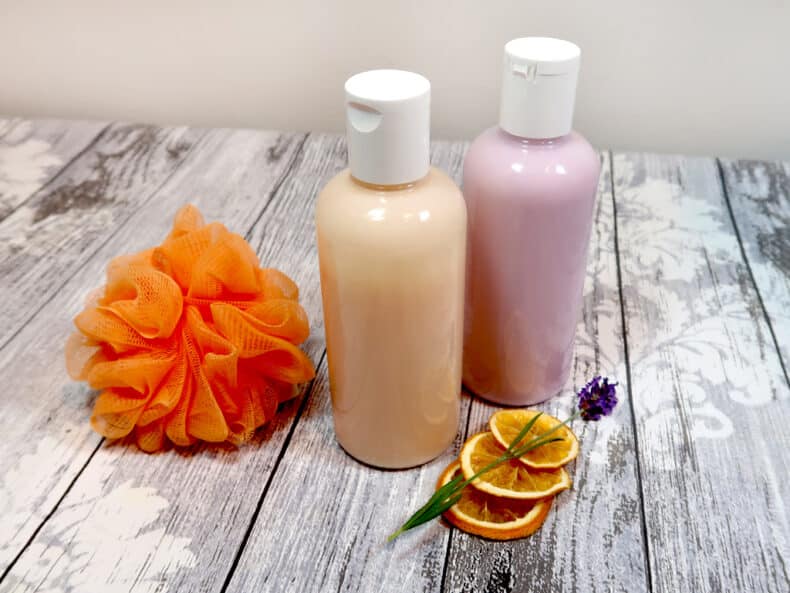
Although keep in mind that the essential oils do have a way of tinting the creamy texture of your body wash. If you do want to use a little coloring, look for either a vibrant food-grade colorant or a strong liquid soap dye. You’ll probably only need a single drop!
After I’d finished formulating this body wash recipe I knew it was going to be one of my all-time favorites. I love the texture, look, and feel.
I loved everything about it, including making it. Although it’s worth mentioning that because this recipe calls for an emulsion, it’s a little step up from my other liquid soaps in terms of difficulty. But its definitely worth the effort!

As an Amazon Associate, I earn from qualifying purchases. If you buy via the links here I may earn a small affiliate commission at no cost to you, please read my affiliate disclosure.
Ingredients
Equipment
Method
- 210 grams Distilled Water, 30 grams Olivem 1000Weigh out and place the Olivem1000 and the distilled water into the heatproof container.

- 16.5 grams Glycerine, 1.5 gram Xanthan GumPlace the glycerine into a small beaker/container, add the xanthan gum and stir until fully dissolved. Set to one side for later.
- Place the beaker containing the water and Olivem1000 into a water bath to melt. You can do this by filling a saucepan with a couple of inches of water and bringing it up to a simmer.
- Once the Olivem1000 has melted remove the container from the heat and give it a good brisk stir. Then, add the glycerine and xanthan gum mixture.
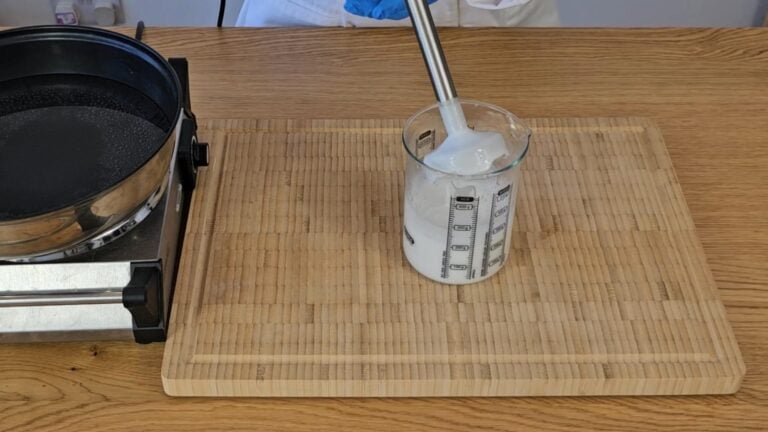
- Pick up your stick blender and blend for a couple of minutes until fully emulsified. You will notice the cream is smooth and has started to thicken. Once this happens stop using the stick blender and hand stir only.
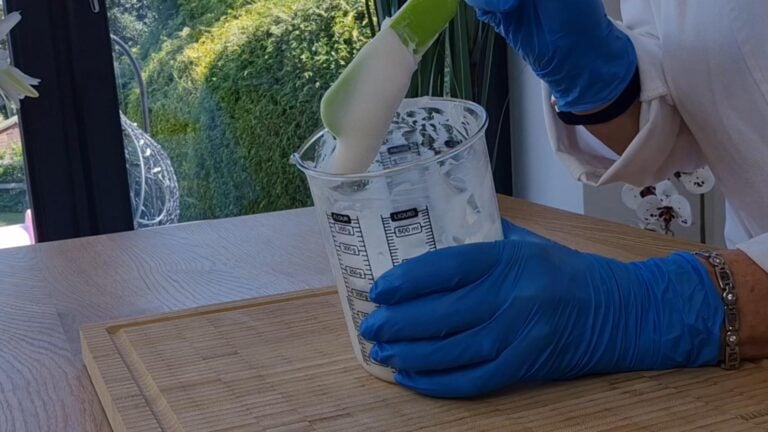
- Continue to hand stir until the mixture has cooled to 40°C (104°F) and it looks thick and creamy. This may take a while so be patient.
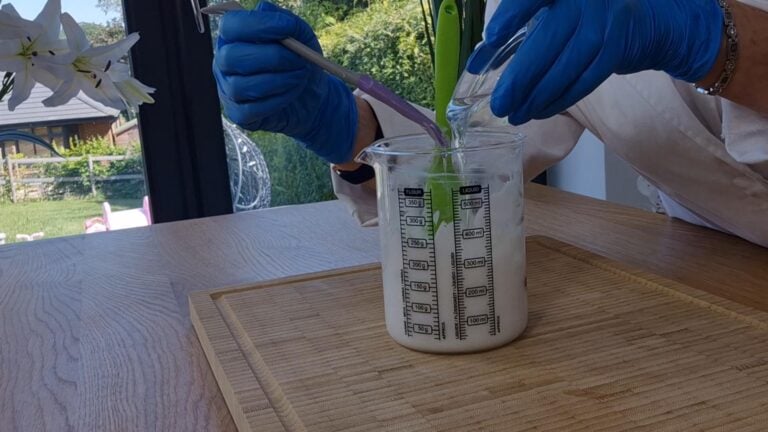
- 36 grams Coco GlucosideOnce the mixture has cooled to 40°C (104°F) carefully stir in the Coco Glucoside. Stir this in well but be careful enough not to make the glucoside bubble up. You may notice the mixture looks a bit slimy at this point, keep siring until the mixture becomes smooth again.
- 3 grams Essential Oil or Fragrance OilNow we can add our essential oil or fragrance. Once again stir it in well so that it has been fully dispersed.
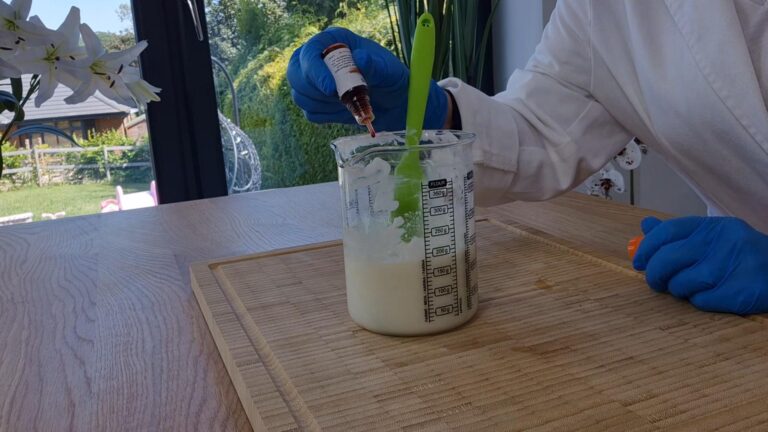
- 1-2 drops Liquid Soap DyeIf you are using a color you can stir this in now. We are using orange to match our orange essential oil. Having said that, this creamy body wash looks pretty good without adding color to it. But if like me you can't resist, add a drop at a time until you are happy with the result. Be sure to stir slowly so as not to agitate the surfactant.
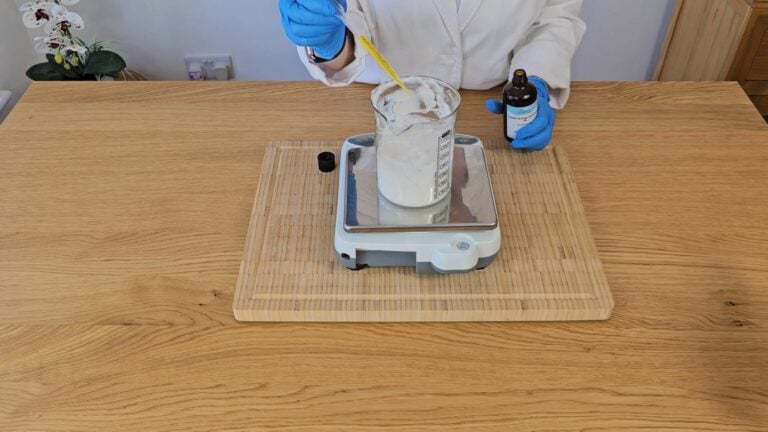
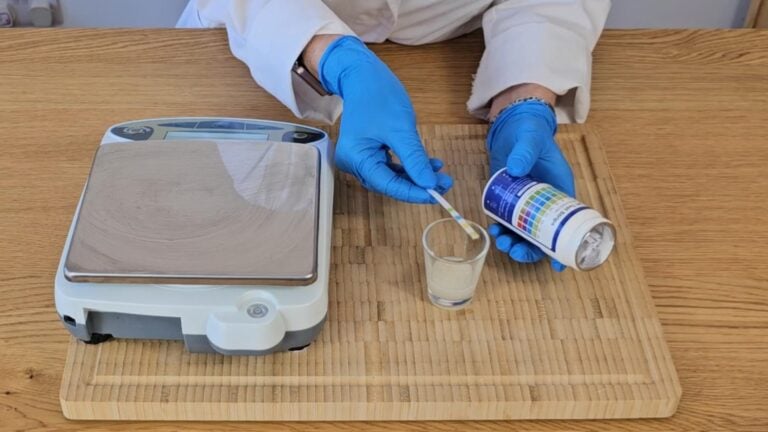
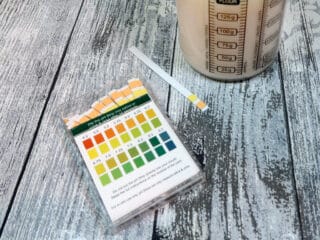
- PH ModifierNext, we need to ensure that our product is the right PH. For this recipe, we’re aiming to have a mild body wash, somewhere between 4 and 6 is good.To test the pH properly, first dilute the body wash. Mix 1 part body wash with 9 parts distilled water (for example, 1g body wash with 9g water). Stir gently until combined. Dip a universal pH strip into the diluted mixture for a few seconds, then remove it and compare the color to the chart that came with your strips. If it’s a little too high, you can add a couple of drops of lactic acid to bring it down. However, you can also use citric acid, but it will need to be diluted in a solution of 10% citric acid to 90% distilled water. Because this recipe contains a surfactant, it is highly unlikely that your body wash will test lower than a 4 on the PH scale, so don’t worry too much about needing to raise it.
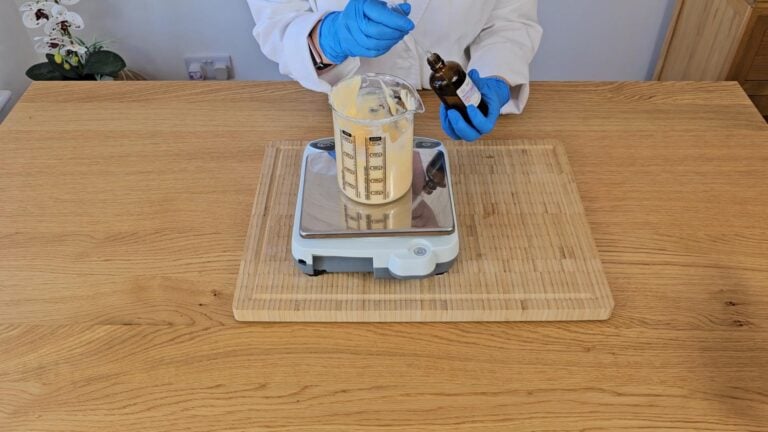
- 2 grams Geogard ECTOnce we have balanced the pH, we can finally add our preservative. Stir until fully incorporated. Finally, re-check the pH just in case the preservative has altered it.
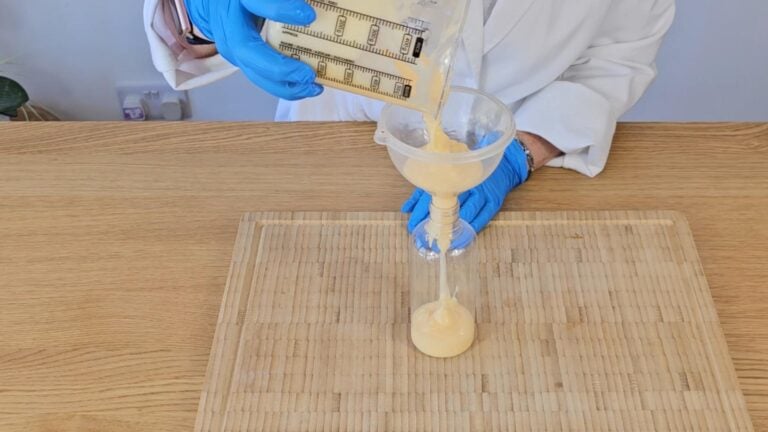
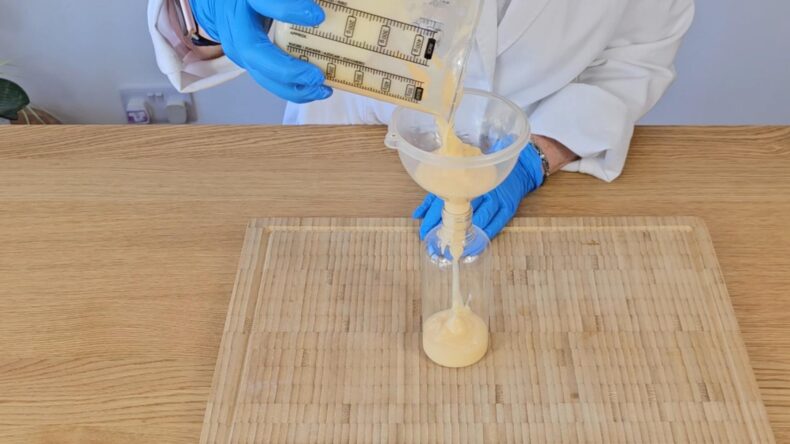
- 8 oz PET Plastic BottleTransfer to a suitable bottle. If you have a steady hand you can pour it straight into the bottle, or use a funnel for a cleaner pour.
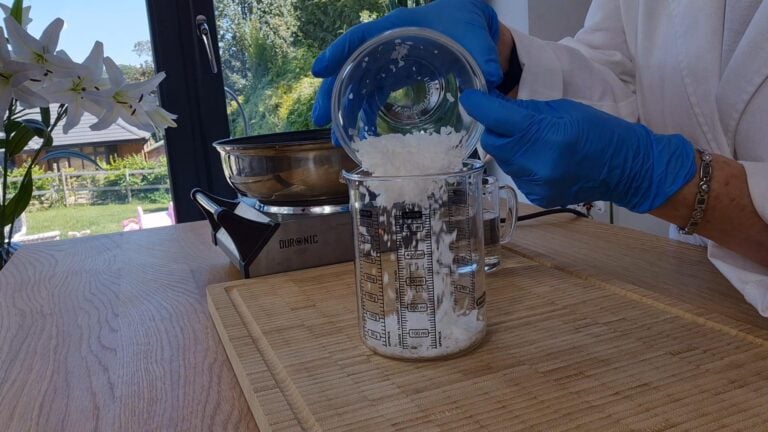
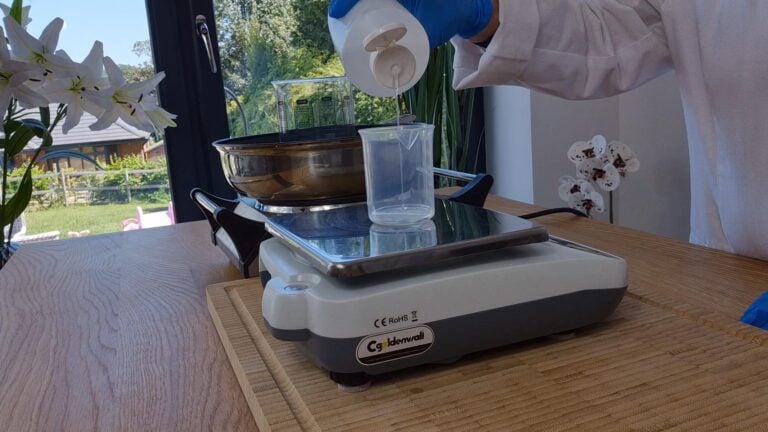
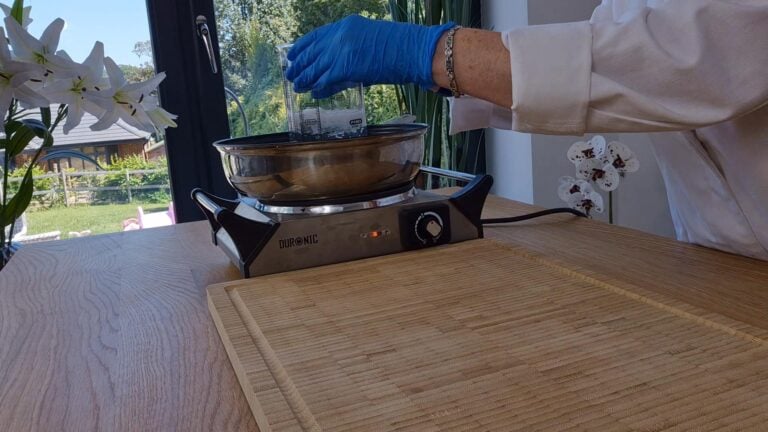
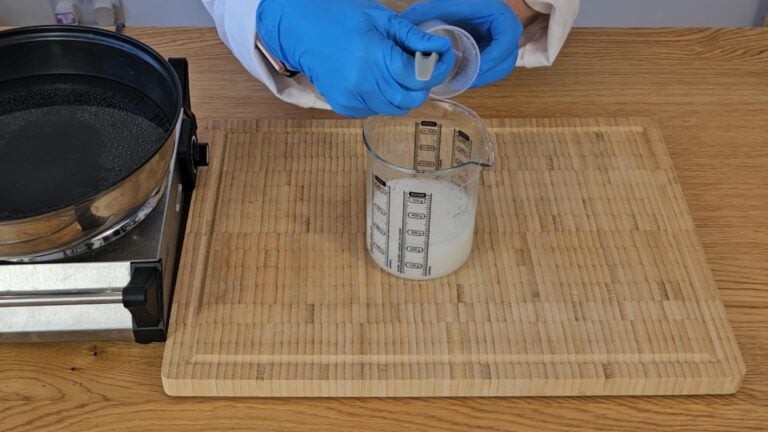
New to DIY skincare?
If you’re enjoying making your own products, you might like Radiance, my free email course where I teach the foundations of DIY skincare step by step!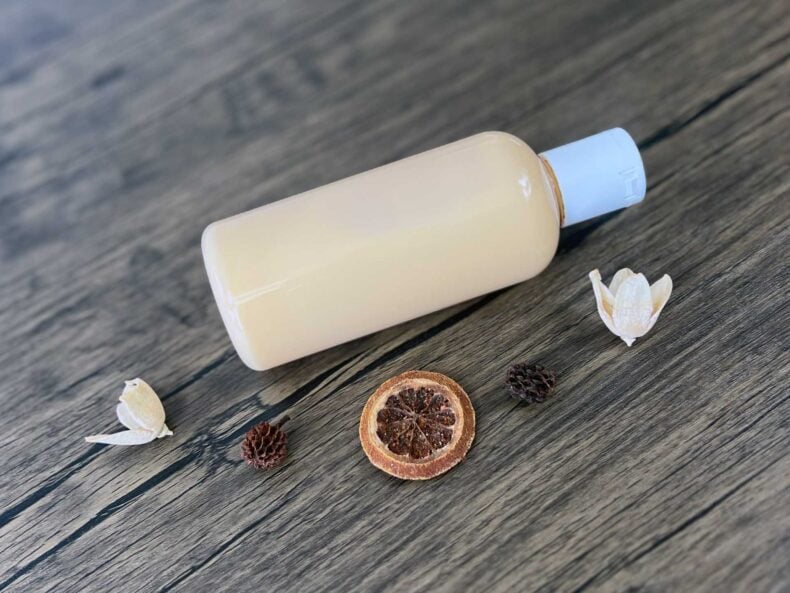
Spotlight On Ingredients
The Surfactant
I’m using coco glucoside which is a mild surfactant that’s often used in baby products. Coco glucoside is a surfactant that I regularly use in my bath, shower, or cleansing products.
It’s classed as a green surfactant that’s biodegradable and has shown to be very compatible with our skin. This means there’s less chance of it irritating the skin as so many conventional foaming agents do. It’s also really easy to work with!
Emulsifying Wax
Olivem 1000 is a natural emulsifying wax that adds to the creaminess of the body wash recipe. I’ve tried this recipe using other emulsifying waxes, all with disastrous results so this is non-negotiable. If you can’t get hold of it right now, I wouldn’t recommend attempting to substitute.
Keep in mind, if you’re struggling to get hold of ‘Olivem 1000’, try to find a generic version. Olivem is a brand, so it sometimes isn’t always available. Look for its INCI name, ‘Sorbitan Olivate, Cetearyl Olivate’.
Glycerine And Xanthan Gum
The glycerine has two functions in my body wash recipe. Firstly it adds moisturizing benefits to the wash, secondly, it helps the xanthan gum dissolve more efficiently.
We are using the xanthan gum to aid the Olivem 1000 in adding a little extra thickness and stability to the finished product. Xanthan gum is a natural product and is vegan friendly.
Essential Oils
I’m using simple but effective essentials here. The orange I’m using is 5 folds which means it smells five times stronger, so I’m only using 0.5% in mine. If you are using ordinary sweet or bitter orange, use around 1%. Orange essential oil is a superb cleaning oil and has some wonderful uplifting properties making it a good choice for an invigorating morning shower.
Lavender essential oil is quite possibly the best all-around essential oil on the market, with an excellent price tag as well! It’s great for destressing, inducing sleep, calming irritated skin, fighting off wrinkles, and moisturizing dry skin.
Preservative
As this body homemade wash formula contains water it will need a preservative, this will give you a shelf life of around nine months for your DIY body wash. I’m giving a guideline of using 1% but always check the manufacturer guidelines on the recommended amount, or speak with your supplier if it didn’t ship with instructions.
Substitutions
- Distilled water: A hydrosol would be nice. But to be honest this is a wash off product so it feels a little wasted here.
- Olivem 1000: I’ve only ever used olivem1000 for this recipe so I am struggling to come up with a sub. Maybe try a small batch with montanov 202 and see how it goes.
- Glycerin: Aloe vera would make a decent substitution.
- Xanthan gum: Hydroxyethylcellulose (HEC) would be my first choice
- Coco Glucoside: Decyl Glucoside or Caprylyl/Capryl Glucoside the latter will result in a slightly thinner body wash.
- Essential Oil: You could use an essential of your choice or a fragrance oil
- Preservative: We have used geoguard ECT (preservative eco) you could use one you have to hand but remember to check the usage rate with your supplier, and adjust if need be.
Final Thoughts
I’ve been using this DIY body wash every day for the last few weeks, and honestly, my skin feels amazing. Because this is a wash-off product, it won’t nourish your skin like a lovely homemade lotion.
However, it works amazingly in conjunction with face cream recipe to give your skin an extra oomph of skin-softening goodness.
They also smell amazing! I decided to only use a single essential oil in each of the two creamy body wash recipes I’ve made. But can you imagine how fantastic they’ll smell if you use your favorite essential oil blend?
If you don’t quite feel ready to make a creamy body wash that requires an emulsion, take a look at either my shower gel or bubble bath recipes. They both use surfactants, and use some of the same processes like this one, except it’s a little easier because there is no emulsion.
Then you can come back here and make this body wash w




I feel like I ask a lot of questions on your amazing posts! I am trying to understand the difference between olive squalane and olivem-1000. What, exactly, is olive squalane?
I apologize for my ignorance, but I’m really wanting to dive more into skincare and want to understand better.
I love Squalene! But yes, those two ingredients are very different from each other. Olivem-1000 is an all natural e-wax that we use to emulsify oils and water together to make a light cream/lotion. It’s the functional ingredient that keeps water and oil together (which otherwise will not mix on their own as they repel each other).
However, squalene is a cool down phase ingredient (add with preservative and vitamin e at the end) that we can use in our emulsions, as well as many other types of skin care products, to bring added moisturizing benefit.
Our skin naturally produces squalene, but production begins to slow down in our 20’s and 30’s until it’s no longer present in the skin. Our skin becomes noticeably drier as a result of our squalene ‘drying up’, and is one of the causes of aged skin.
However, by adding some squalene derived from plants and fruits to our skin care products, we can restore some of the lovely skin oil. The most readily available is olive derived squalene.
Thank you! I appreciate all of your knowledge.
With that said, I did cheat and used Emulsifying Wax NF in place of Olivem-1000 and am curious what the “disasterous” results were for you when you tried a different ingredient than Olivem-1000? I was happy with my outcome, but maybe I’m missing something?
Hi Beth,
Yes, I have since looked at this recipe, and the disasters I was getting were from a bit of low-quality e-wax I had at the time and wanted to use up. Turns out it was just a bad e-wax and other substitutes should work providing they are high quality (such as NF like you have used).
Great! Thank you so much!
I followed the recipe to the point… there is no lather 😒
Ekta,
Yeah, unfortunately, this recipe isn’t about lather or foam at all. It’s more about moisturizing and hydrating, as I’ve put in lots of cosmetic butter. But the downside of cosmetic butter is it does reduce the surfactant’s ability to flash foam, although I have not chosen surfactants for this purpose either. But don’t worry too much, it will cleanse skin as well as any other homemade body wash.
Can a carrier oil be added to this?