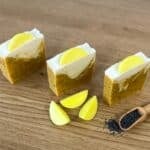
How To Make Lemon Poppy Seed Soap
Make this lemon poppy seed soap with natural oils and a fresh citrus scent. A gentle, exfoliating bar that brightens your day and your skin.
Print
Pin
Yield (adjustable): 4 Bars (approx)
Ingredients:
Lye Solution
- 64.5 grams (2.28 oz) Soapmaking Lye caustic soda/sodium hydroxide
- 129 grams (4.55 oz) Distilled Water
Oils
- 150 grams (5.29 oz) Tallow
- 140 grams (4.94 oz) Coconut Oil Solid
- 160 grams (5.64 oz) Olive Oil
Colors and Additives
- 1/2 tsp (0.01 pt) Annatto powder
- 1/2 tsp (0.01 pt) Brazilian Yellow Clay
- 1 tsp (0.01 pt) Zinc Oxide
- 1 tbsp (0.03 pt) Poppy Seeds
Scent
- 7 g (0.25 oz) Litsea cubeba essential Oil
- 7 g (0.25 oz) Orange Essential Oil
Lemon Segment Topper (optional)
- Clear Melt Pour Soap Base or dried lemon slices
- Food Coloring
Equipment:
- Large plastic jug or plastic bucket
- An old towel
- Lemon/Orange wedge mold optional
Instructions:
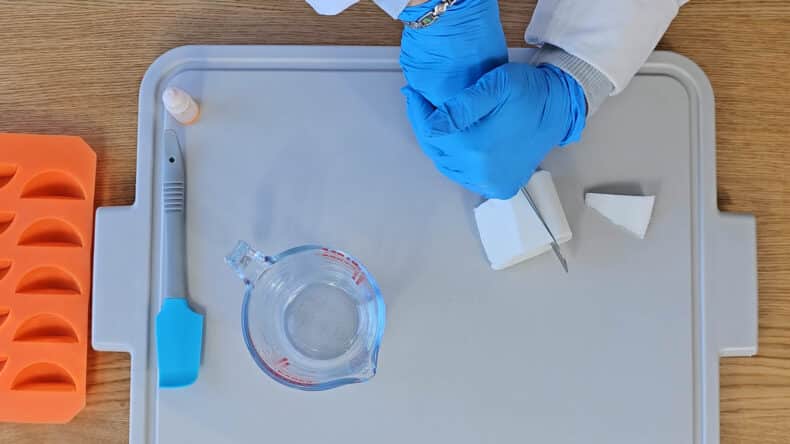
- Make sure you are making the soap in a well-ventilated area. Put on your gloves and eye protection, your mask, apron, and gloves.Its best to make your lemon wedge embeds the day before your soaping day. Chop the melt and pour soap into medium size squares, you will need around 100 to 150 grams. Place the soap into a small size pitcher. Melt the soap on a low heat in a microwave.Clear Melt Pour Soap Base
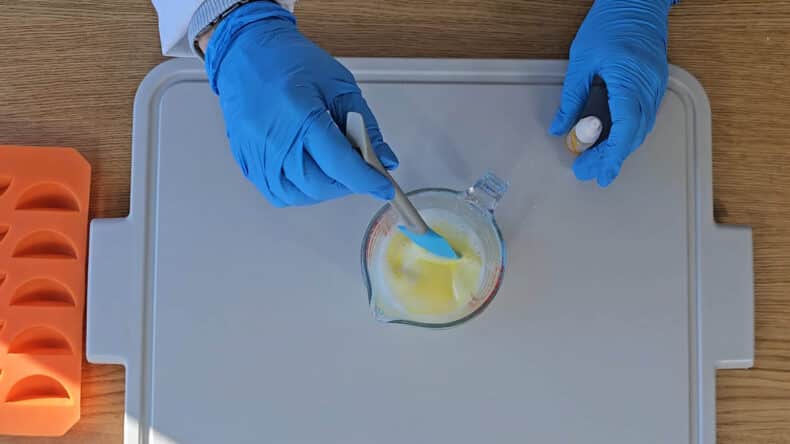
- Once melted, add a few drops of yellow food coloring and carefully stir until the food coloring has been disbursed. Pour into the mold and leave to set for a few hours Before removing.Food Coloring
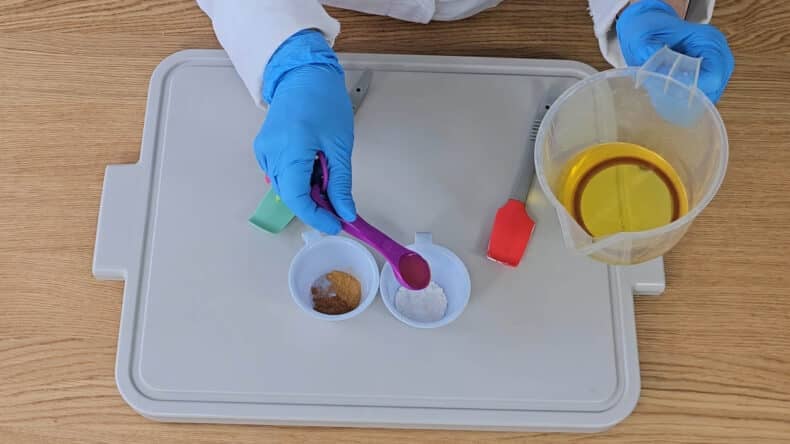
- Pre weigh the essential oils into a small glass container. Once weighed, set it aside for later use. Place the yellow clay into a small container and add around a half tablespoon of water to it. Giving it a good mix before setting it to one side. Place the zinc oxide into a separate small container and add around a tablespoon of oil. Giving it a good mix before setting it to one side.
- In a heat proof pitcher weigh your distilled water. In a separate plastic container, Weigh the lye crystals.When you’re ready, carefully pour your lye crystals into the water. Never pour the water into the lye as it can create a sudden intense reaction that can cause splashing. Then, start stirring it. Although you are wearing a mask, we still recommend turning your head and leaning away while stirring, so you do not breathe any of the fumes. As the water and lye mix this will result in a chemical reaction, and the lye water will increase in temperature and release toxic fumes.Stir until the lye crystals have dissolved and the water looks fairly clear. Now place it to one side, somewhere well-ventilated but safe so that it will not be knocked over. Allow to cool as we get on with our other steps.129 grams Distilled Water, 64.5 grams Soapmaking Lye
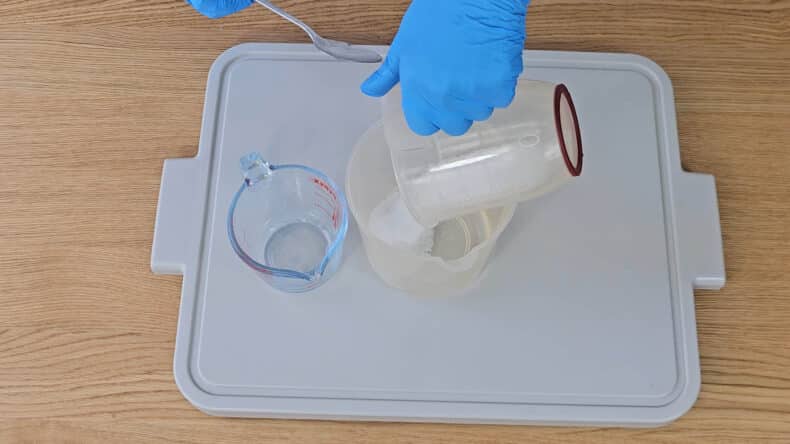
- Weigh your coconut oil and Tallow into a good-sized heat proof container. Melt the oils in a microwave, using 30-second bursts.140 grams Coconut Oil, 150 grams Tallow
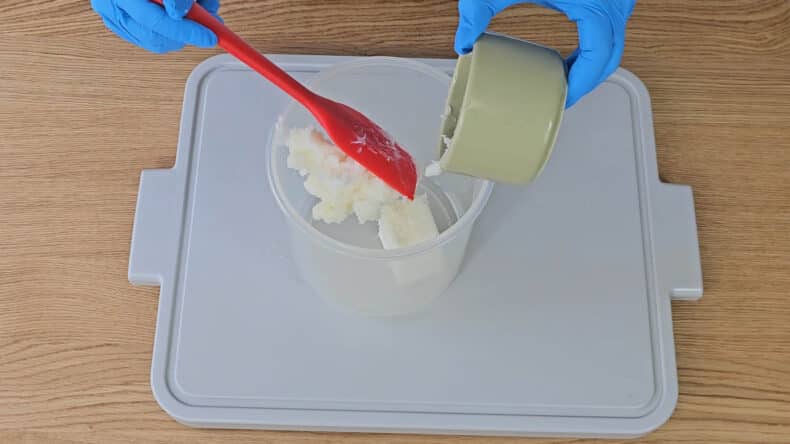
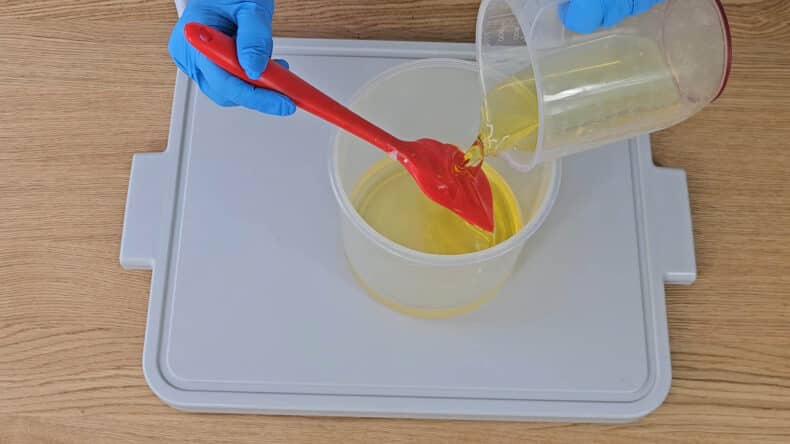
- Once the coconut oil and Tallow have melted, add the olive oil, giving it a quick stir.160 grams Olive Oil
- Now it’s time to balance our oils and lye water. Check the temperature of the oils and the lye water. You can do this with a temperature laser gun or a jam thermometer.We want them both to fall between 120 -100F (48-37C). If they are still too hot, leave them to cool for a while longer.They do not need to be the same temperature, for example, the lye could be 120f and oils 110f, but it is best to keep them within 10 degrees of each other.
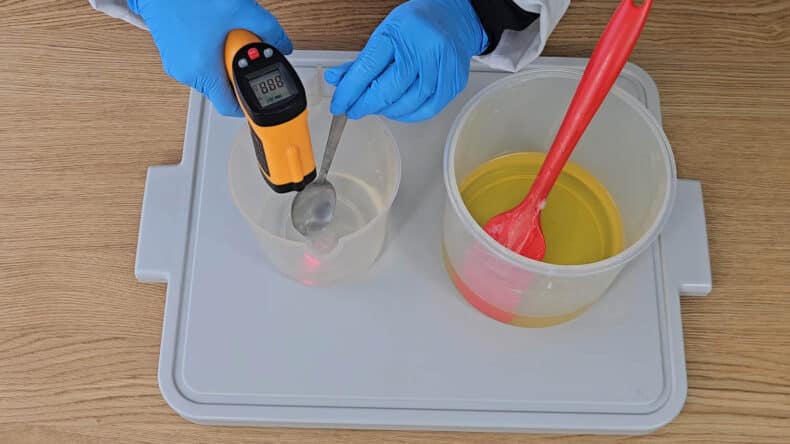
- Once you’re satisfied they’re balanced, pour your lye solution into your oils.
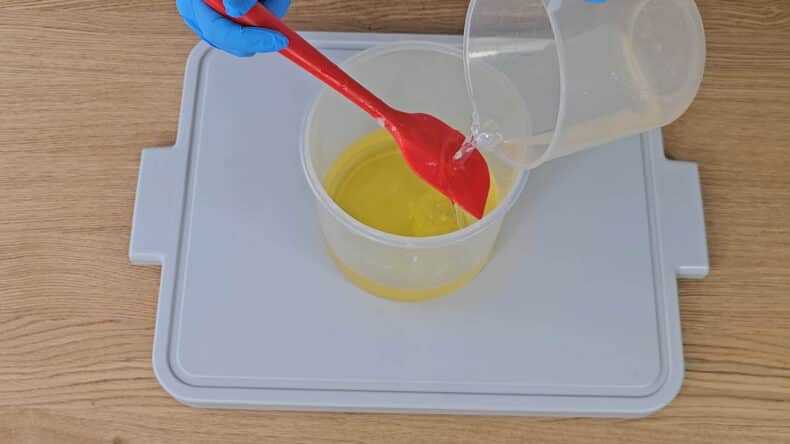
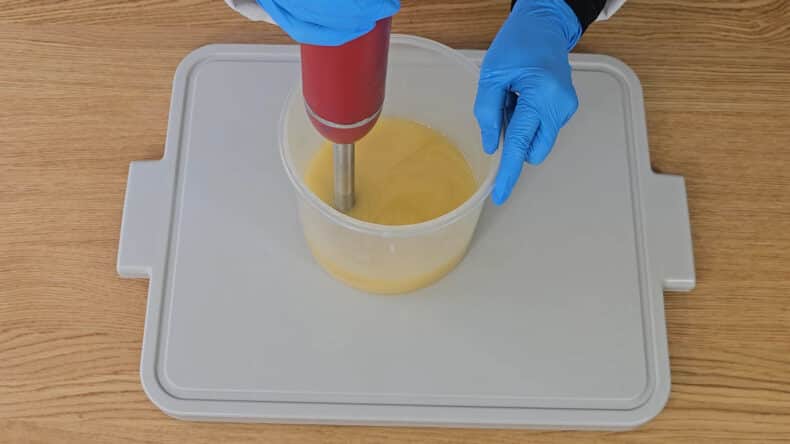
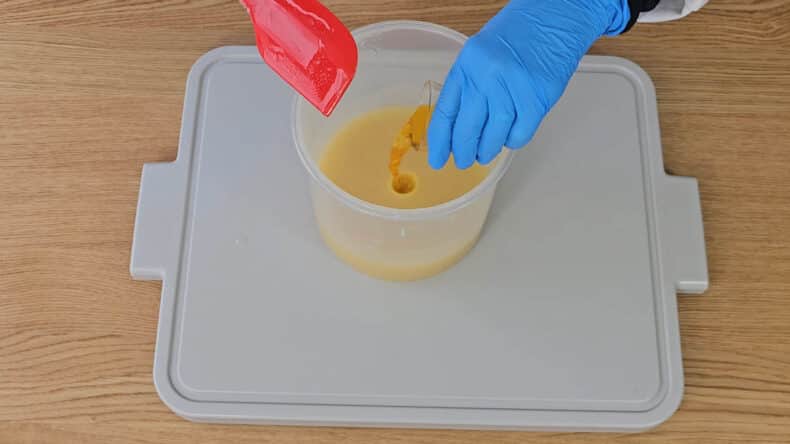
- Before turning on the stick blender to mix the oils and lye, gently tap the stick blender against the bottom of your container. Continue tapping until all the air bubbles have been released.Turn the stick blender on and blend until all the oils have been fully emulsified into the lye solution, switch off the blender, and check to see if the soap batter has reached what we call trace, we want it to be at a light trace. Trace is when you can drizzle a little of the soap over the surface and you can see it before it disappears back into the mix, you have reached a light trace. If the soap hasn't reached a trace, continue to blend, checking regularly.
- Now that we’re at the trace, it’s time to add our essential oils. Give the batter another quick blend with the blender or with a spatula.7 g Litsea cubeba essential Oil, 7 g Orange Essential Oil
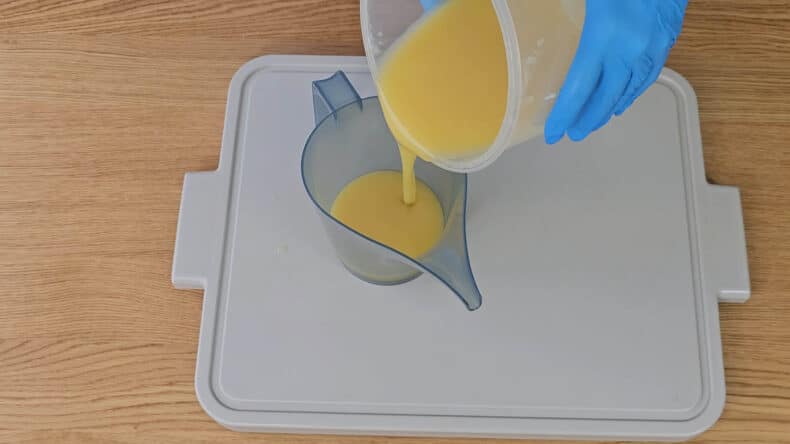
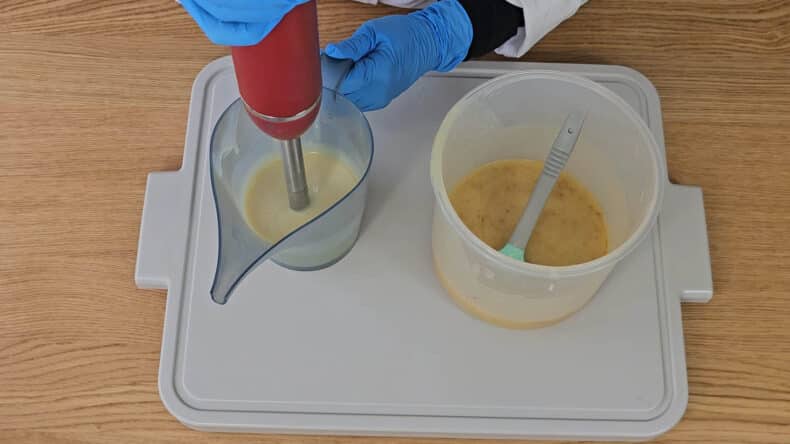
- Remove around one third of the soap batter into a sparse pitcher. Add the Annatto powder and the Brazilian clay to the remaining container with the larger batch of batter and the zinc oxide to the smaller batch of batter. Give them both a good stir with a spatula.1/2 tsp Annatto powder, 1/2 tsp Brazilian Yellow Clay, 1 tsp Zinc Oxide
- If the batter is very thick you may want to continue stirring with the spatula. Otherwise continue to stick blending them until all of the colorants have been disbursed. If possible I try to start with the lighter color first. In this case that would be the zinc oxide. Bring them both up to a medium to thick trace, then add your poppy seeds to the larger container with the Annatto powder and the Brazilian clay1 tbsp Poppy Seeds
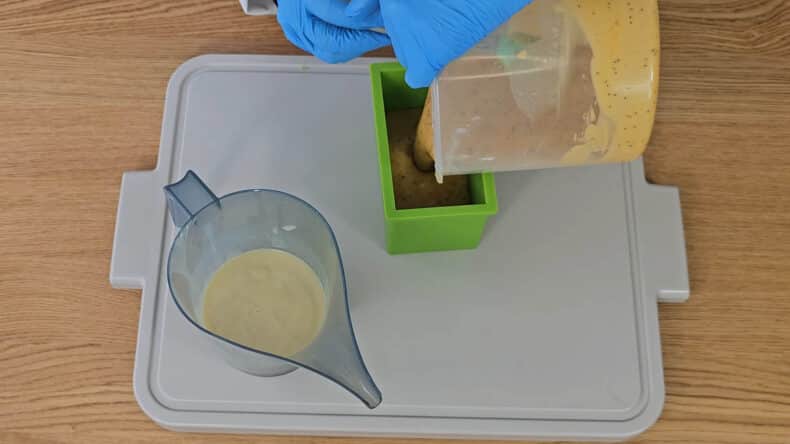
- Once you are ready, pour or spoon the Annatto and clay batter into the mold. Leave it to thicken to give some support to the second layer.
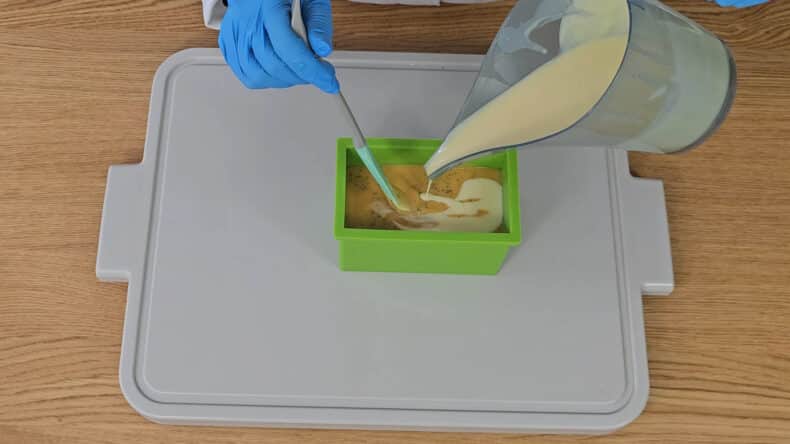
- When thickened pour around ¾ of the white layer onto the first layer, mixing it in with the stirrer to create an uneven look when it's cut. Pour the remaining white on top.
- Once the soap has thickened enough to hold its shape, use a spoon to texture the top. You can create swirls, peaks, or waves depending on the look you want.
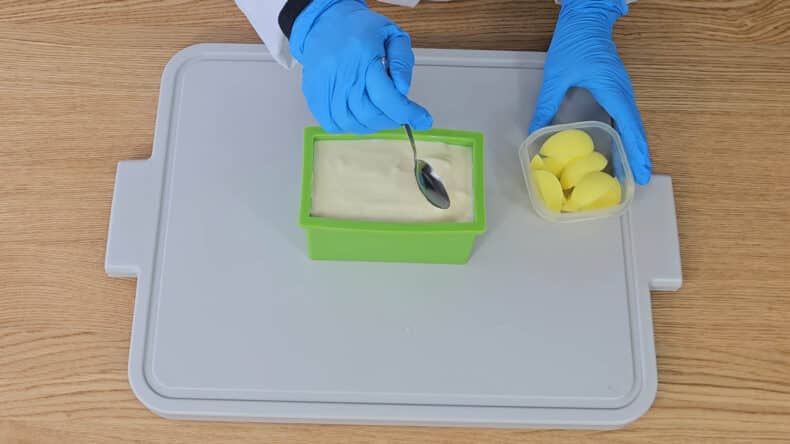
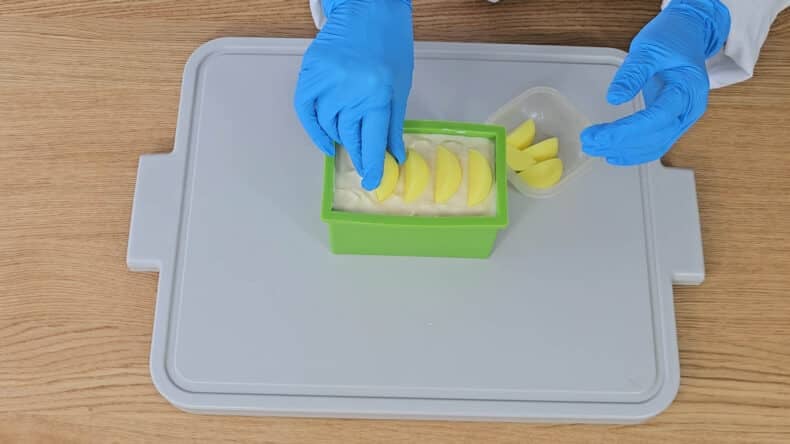
- When you’re happy with the texture, gently place the embedded toppers onto the soap. There’s no need to press them in too much, just position them carefully between where you plan to cut each bar. Then, Leave the soap for 24 to 48 hours to harden.
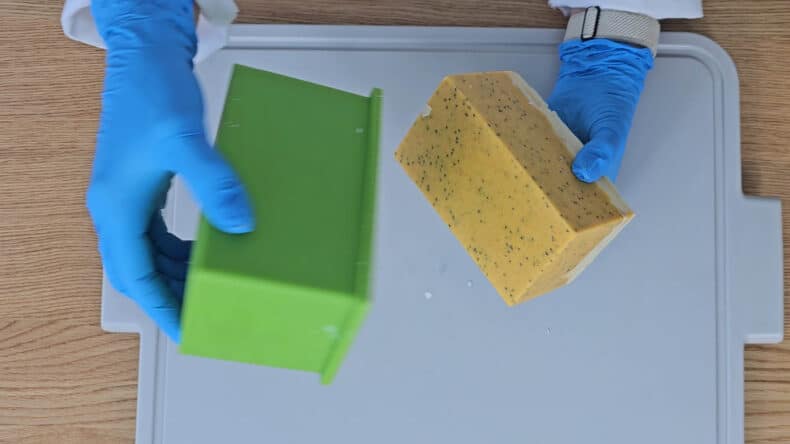
- Once the soap has hardened, you can remove the soap from the mold.
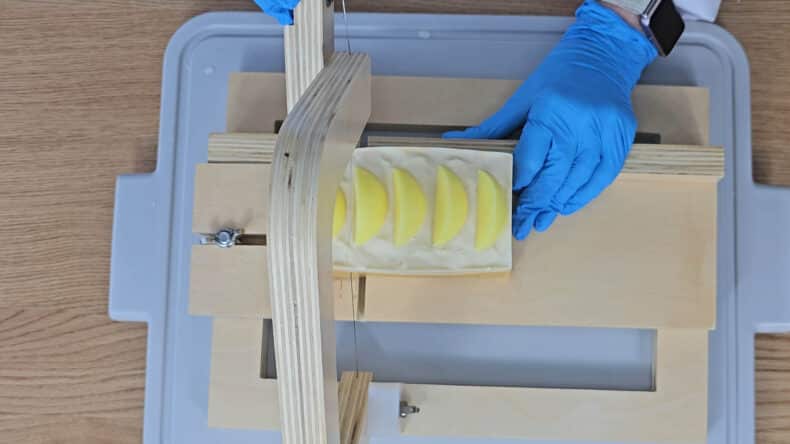
- Carefully cut it into slices. Take your time and avoid cutting through the embeds so each bar has a lemon wedge on it. The soap will need to cure for 4 to 6 weeks before using.
Tried this projectMention @Savvyhomemade or tag #savvyhomemade!