
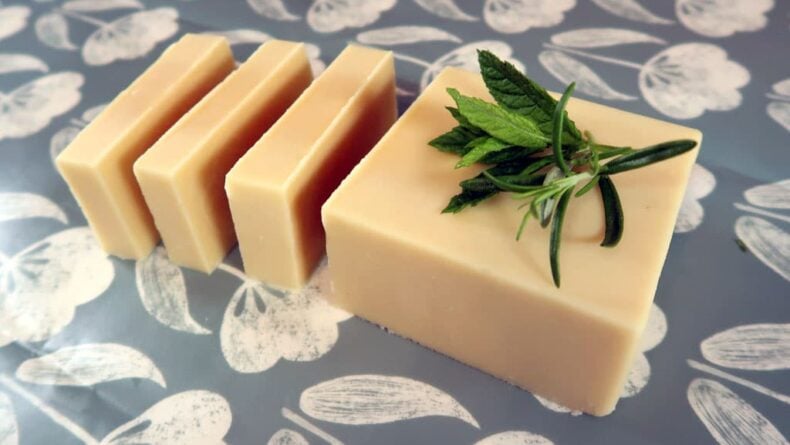
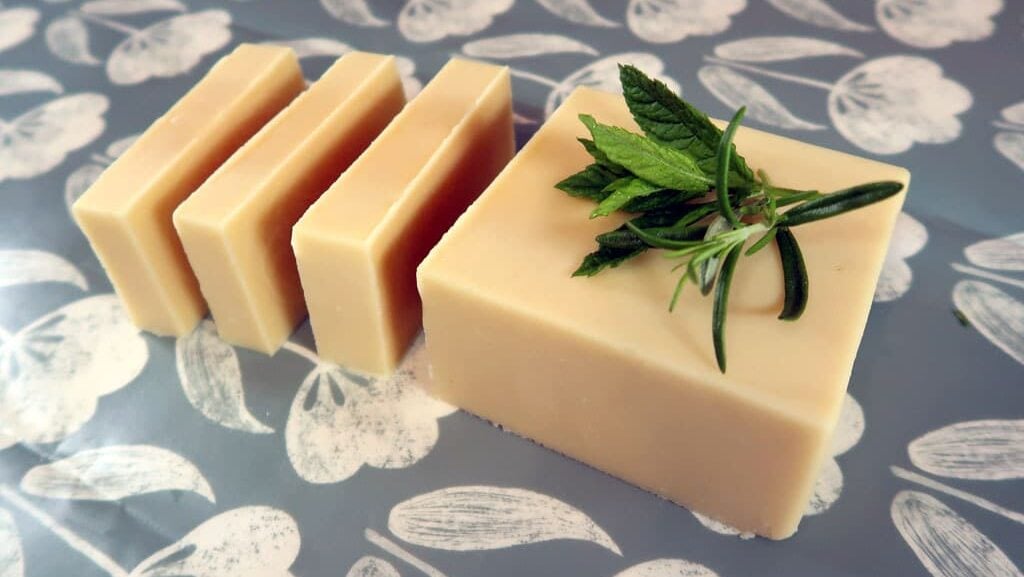
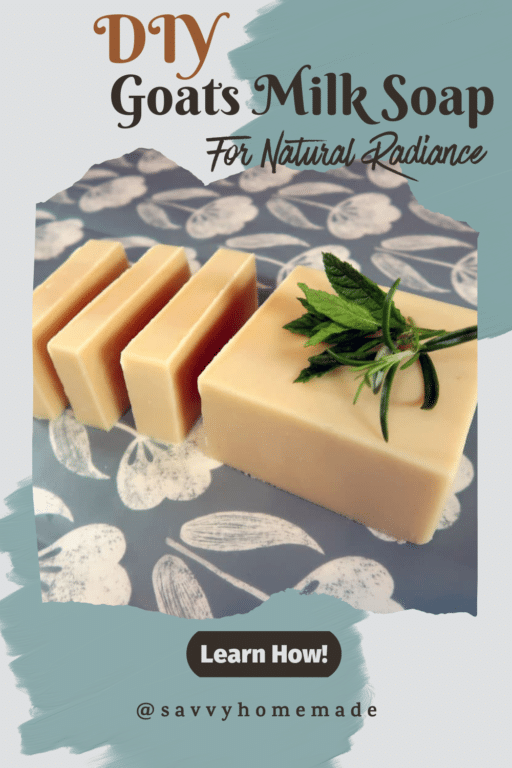
This goat milk soap recipe is beginner friendly but still feels luxurious, making it a lovely project for gifting or your own daily use.
Goat milk adds a lovely richness to cold process soap, and it is one of my favorite ingredients to work with. It makes a gentle, creamy bar that feels soothing on dry or irritated skin, which is why so many people with eczema or sensitive skin reach for it.
The natural fats in goat milk help moisturize the skin, while its lactic acid provides a light exfoliation that keeps the complexion soft and smooth. Compared to water-based soaps, goat milk soap is far less drying and leaves the skin feeling calm and nourished.
Watch It Being Made

About My Goat Milk Soap Recipe
Goat milk soap is one of the most comforting soaps you can make at home. The fresh goat milk brings natural fats, sugars, and vitamins that help soften, nourish, and calm the skin, while a blend of rosemary and peppermint gives this bar a beautifully fresh, woodsy scent.

If this is your first time making soap with fresh milk, do not worry. I will walk you through the steps and share a few simple tips to help your batch turn out beautifully. Goat milk can also be used in other homemade skincare, but in this post we are focusing on making a lovely bar of goat milk soap at home.
But just for your info, you could, for example, add goats milk to your favorite face mask recipe for an extra boost of hydration.
Freezing The Goats Milk First

First of all, fresh goat’s milk will more than likely change the color of your soap to a deep honey color. So it’s not very suitable for use with any pigments. It also tends to have a strong smell; thankfully this doesn’t stay with the finished soap!
The reason for this is that adding lye to your milk heats it so quickly (often to over 150°F) that it can burn the milk which produces a darker color. It also has a tendency to curdle your soap, which is never a good thing!
You can avoid these issues by freezing the milk before adding the lye. I simply pour it into an ice cube tray the evening before so that it’s frozen solid before I use it. The colder your milk is the lighter your soap will be.
Try To Source The best Goats Milk
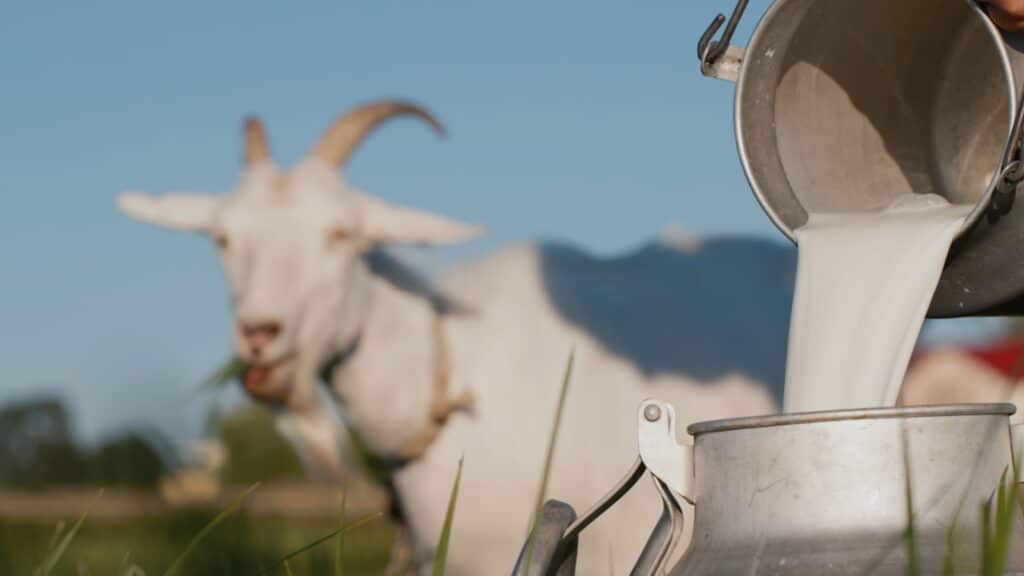
You can buy goats milk from your local supermarket if needed. However, if you can get organic, grass-fed goat’s milk locally at a farmer’s market, then definitely give that a go. Fresh is always best in my book!
The Essential Oils I’m Using
For the rosemary and mint goats milk soap recipe, I used rosemary essential oil to compliment the goat’s milk with its soothing properties which again help with dry skin. It also brings a lovely woodsy scent to the soap.
I used mint essential oil, too, as it helps to tone the skin as well as hydrate and rejuvenate. It has a cool and refreshing aroma that blends wonderfully with the rosemary.
If you enjoy making cold process soap and want more reliable results, you might also like my Natural Soap Making Course.
Inside the course I share tested recipes along with clear guidance on oils, lye, colors, and additives, so you can make beautiful, dependable, & natural soaps with confidence.
It’s 25% off this week. 👉 Explore the course here

As an Amazon Associate, I earn from qualifying purchases. If you buy via the links here I may earn a small affiliate commission at no cost to you, please read my affiliate disclosure.
Ingredients
Equipment
Method
- Freeze the goat milk overnight.

- If you’ve not made soap before, take a look at my full cold process tutorial here.Put on your protective clothing, gloves, mask, and glasses. I always find it best to then prepare and weigh all of the ingredients before starting.
- 256 grams Goats Milk, 128 grams Soapmaking LyePop the goats milk ice cubes into a jug then carefully add the lye. Once the lye has dissolved, set it aside to cool in a safe place.
- 315 grams Coconut Oil, 360 grams Olive Oil, 100 grams Sunflower Oil, 80 grams Castor Oil, 45 grams Cocoa ButterPut the coconut oil, olive oil, sunflower oil, castor oil and cocoa butter into a large glass jug then melt in the microwave using a 30 second blast. Then set aside to cool.
- Now we need to balance the oils and the lye. They should be between 120f and 90f (49c 60c)
- Once balanced, pour the lye into the oils. Do this slowly to avoid splashing
- Using a blender, stir your mixture for several minutes before switching it on. Turn the blender on and give your mixture a few short 3 second blitz, stirring between each burst. Continue until the batter thickens and leaves a thin trace on the surface of the batter before disappearing back into the mixture.
- 15 grams Rosemary Essential Oil, 15 grams Peppermint Essential OilNow you can add the rosemary and mint essential oils. Then give it another few blasts with the blender until it thickens but remains liquid.
- Next, transfer the soap to the mold. If the mixture is too thick to pour, then you might need to spoon it in instead.
- Pop the mold into the fridge for 24hrs to harden. Take it out of the fridge and leave for a further 24hrs before popping it out of the mold. Remember it will still be a bit caustic until cured so put on your gloves before releasing it. It will then need to be cut.
- The goat milk soap will need to cure for around 4 weeks before it is ready for use. Let the soaps sit and air in a cool dry place, remembering to rotate them weekly.


New to DIY skincare?
If you’re enjoying making your own products, you might like Radiance, my free email course where I teach the foundations of DIY skincare step by step!FAQ
How do I stop goat milk soap from scorching?
Keep the goat milk very cold before adding lye. Frozen milk prevents overheating and helps the soap stay creamy and pale.
Can I make this goat milk soap without essential oils?
Yes. This goat milk soap recipe works beautifully unscented. Just leave out the rosemary and peppermint if you prefer a mild natural bar.
Why did my goat milk soap turn darker than expected?
Goat milk can caramelize if it gets too hot during the lye phase. Work slowly, keep the milk chilled, and mix in small amounts.
Does goat milk soap work for sensitive skin?
Yes. Goat milk has natural fats and lactic acid that calm and moisturize the skin, making this a gentle bar for most skin types.
Can I swap the oils in this goat milk soap recipe?
You can adjust oils, but always recalculate lye using a trusted lye calculator. Each oil has a different saponification value.
Final Thoughts
So there we have it, how to incorporate goat’s milk into your soap! I love to play around with different ingredients in my soap formulations, and goat’s milk can make a bar of soap so much more luxurious.
Another great ingredient to try is coconut milk! My coconut and lime soap uses coconut milk in a similar way to the goats milk soap recipes, and it feels amazing on your skin. Definitely take a look at it if you’re interested in using different types of milk in your soaps.
Last but not least, don’t forget to follow us on social media. Facebook and Instagram are great ways to stay up to date on everything we’re doing here on Savvhomemade.
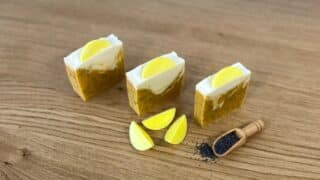
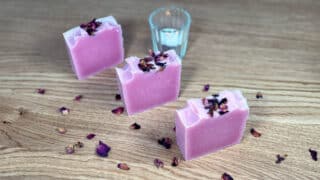
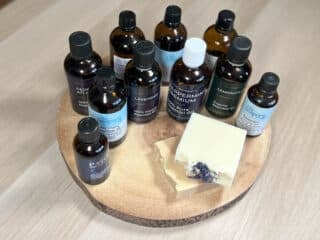



These goat milk soap recipes sound amazing! I love how natural ingredients like goat’s milk can help keep the skin soft and moisturized. The rosemary and mint combination must smell so refreshing! Thanks for sharing these great tips!
Hi!
I’ve bought your courses and truly enjoy them. Recently, I did want to try creating goats milk products and decided to go with this recipe and followed it to the T; however, my soap separated and liquified. Any idea on how this occurred? Can I fix it?
Thank you.
Hi Juliette,
This can happen for a number of reasons, so let’s run through some of them. The two that jump to mind are additives that don’t work well with this soap recipe (e.g. pigments, extracts, fragrances). So I would first take a look at this and see if you’re using anything different from what I’ve used. Even then, ingredients can vary from one manufacturer to the next. Confirm with your suppliers that your ingredients are suitable for use in cold-process soap.
The only other thing I can think of (besides maybes making sure you’re balancing the temperature of your oil and lye before mixing) is that you’re not blending for long enough. Make sure you’re achieving a light trace before you add your additives. This can be difficult to determine, but you can take it to a medium trace if you’re not sure.
Hope this helps. Try these tips and let me know if they help. If not we can troubleshoot a bit more.
Hi there! Love these recipes and the nice and detailed way you explain how to do this for newbies like me! So I’m allergic to coconut, could I sub the coconut/cocoa butter with another oil or butter??
Hi Baily,
Absolutely you could! However, it’s not as easy as substituting like for like. Soap making requires delicate measurements and a ratio of water to lye, and this ratio changes depending on the different oils that are incorporated into a cold-process soap recipe. Therefore, I would recommend running the full recipe, with your chosen substitutions, through a lye calculator to make sure your soap is not too lye heavy.
If you’re not already, consider signing up for free membership to my blog, which includes free access to a soap lye calculator. You can also do my new free course, ‘Radiance’ which teaches how to make emulsions and micellar waters!
Love your soap recipe. Now I am being asked if I can make goat milk shampoo!! Can I and if so do you have a recipe. Look forward to hearing from you. Margaret
That’s great! I love soaping too, and my friends also love all the free soaps. As for shampoo, I’ve never tried it, so I can’t say for sure. However, I would definitely explore this, see what you can find on the web. I’d love if you could update me if you do find an answer. Thanks so much!
Hi Ann,
Many apologies, I’ve amended the method. There’s no sunflower in this recipe, so you won’t need to add it. You’ll need to wait for the oils to reach balancing temperature on this own. Hope this helps!
Hi Angela, I can’t find fresh goat milk near me. Can I use canned goat milk?
Hi Eppie, I don’t see why not. You can also use powdered, but be sure to mix it at the recommended ratio by the manufacturer.
Hope this helps
Hi Sherry,
Many apologies, the method was a bit confusing, but I’ve cleared it up for you. The Cream Goats Milk Soap actually doesn’t require any distilled water at all. Go ahead and add your frozen goat’s milk to your pyrex jug, then your lye. No distilled water needed for this one.
Hi Angela, First of all let me say that your website is a gold mine of ideas and inspiration, so congratulations!
Then I was wondering if this recipe can be made with fresh donkey milk too. Here in my area I’ve found a farm that produce organic donkey milk, so I’m willing to give it a try…
I have noticed that some people also freeze the milk before adding to the lye solution (http://www.lovinsoap.com/2012/10/how-to-make-goats-milk-soap-using-farm-fresh-goats-milk/) in order to preserve the milk properties….what do you think, this could be the case?
I would also ask what do you mean by “Shortening (vegetable fat)”? Any vegetable fat would do the job? Could I use for example sustainable harvested Palm Oil or organic Coconut Oil? Or is there a specific ingredient I have to use instead?
Thank you so much!
Do you put anything in the cutlery mold to make the soap come out easily? I got one of those molds and I can’t get the soap out without a lot of banging it on the floor?
Yours looks so smooth.
Thanks,
KK
Hi Karen, welcome to Savvyhomemade!
A quick grease round with a little solid oil from any of your soap recipes should do the trick. Check out the full cold process for more detailed info and complete steps from start to finish.